Royal Palace Stays in India
17 Sep 2025
Two weeks in India. It sounds like enough - until you open a map and realise that India is not a country but a continent disguised as one. With over three million square kilometres, thirty-plus UNESCO World Heritage Sites, and landscapes that shift from desert to jungle to mountain to coast within a single day's flight, the question is never whether there is enough to fill fourteen days. The question is always: how do you choose?
The answer, for most international visitors on a first luxury journey, lies in a route that has been refined by decades of private travel design: a journey that balances the iconic with the intimate, the royal with the rural, and the ancient with the atmospheric. This itinerary has been crafted specifically for the discerning international traveler who wants to emerge from two weeks in India with a genuine sense of having understood something - not simply checked off a list of monuments.
The route below is the one we recommend most consistently to first-time visitors at Top India Luxury Tours. It begins in Delhi, traces the Golden Triangle to Agra and Jaipur, moves into the heart of Rajasthan through a tiger reserve and royal desert cities, and ends with a complete change of register in the tropical backwaters and spice hills of Kerala. It is a 14-night journey that covers the full breadth of India's most compelling experiences - and one that can be adapted, extended, or refined to suit any travel style.
One week in India is enough to feel the energy. Three weeks is enough to begin to understand it. Two weeks sits in the precise sweet spot: long enough to move beyond the obvious, short enough to maintain momentum and return home energised rather than exhausted.
Research consistently shows that international travelers who spend fewer than ten days in India leave feeling that they rushed, while those who spend more than three weeks without prior experience of the country often find the complexity overwhelming. The fourteen-day luxury itinerary is the format that produces the most consistently rewarding outcomes - a pace that allows genuine immersion in each destination while covering enough ground to provide real perspective on India's diversity.
See the Best of India in Just Two Weeks
Journey through ancient traditions, royal palaces, bustling markets, and breathtaking monuments while experiencing the rich diversity that makes India truly remarkable.
Delhi - Agra - Ranthambore - Jaipur - Jodhpur - Udaipur - Kochi - Alleppey - Munnar - Delhi
| Night | City | Key Experience |
| 1–2 | Delhi | Old & New Delhi, Mughal heritage |
| 3 | Agra | Taj Mahal at sunrise |
| 4–5 | Ranthambore | Tiger safari, jungle luxury |
| 6–7 | Jaipur | Pink City, Amber Fort, palaces |
| 8–9 | Jodhpur | Blue City, Mehrangarh Fort |
| 10–11 | Udaipur | City of Lakes, floating palace |
| 12 | Kochi | Colonial history, Fort Kochi |
| 13 | Alleppey | Kerala backwaters, houseboat |
| 14 | Munnar | Tea estates, hill station serenity |
Stay: The Oberoi New Delhi or Taj Mahal Hotel, New Delhi
Delhi is not a single city - it is eight cities layered upon each other across three millennia of continuous habitation. Your first two days give you enough time to experience both the ancient and the contemporary, without the pressure of trying to see everything.
Arrive at Indira Gandhi International Airport and transfer to your hotel in a private, air-conditioned vehicle. If your flight arrives in the morning, use the afternoon for a private guided rickshaw journey through Old Delhi - one of the most viscerally memorable introductions to India available. Chandni Chowk, the market street built by Shah Jahan in the seventeenth century, remains one of the most densely inhabited commercial corridors in the world: spice merchants, jewellers, fabric sellers, and street food vendors occupy every visible surface.
Jama Masjid - India's largest mosque, capable of holding 25,000 worshippers - rises at the end of the bazaar in red sandstone and white marble. Entry is free and the mosque is open to visitors outside prayer times. From its minarets, the rooftops of Old Delhi stretch away in every direction.
In the evening, dinner at a restaurant in New Delhi - Indian Accent, widely considered the most creative restaurant in the city, is the booking worth making in advance.
The second day opens with a private guided tour of New Delhi - the administrative capital built by the British between 1911 and 1931 to plans by Edwin Lutyens and Herbert Baker. The broad tree-lined avenues, the symmetrical government buildings, and Rajpath (now Kartavya Path) culminating in India Gate all carry a different kind of weight from Old Delhi: the weight of empire, designed deliberately to impress.
Humayun's Tomb - the sixteenth-century Mughal mausoleum that served as the architectural prototype for the Taj Mahal - is one of Delhi's most rewarding sites. With considerably fewer visitors than the Taj itself and a garden design of extraordinary serenity, it rewards unhurried exploration. The Qutb Minar complex, built in 1193 as a statement of the new Islamic sultanate's power, contains some of the finest medieval stonework in India.
The afternoon is yours - the Lodhi Colony art district, a browse through the heritage craft shops at Dilli Haat, or simply the hotel pool and a slow evening.
Stay: The Oberoi Amarvilas, Agra
Travel: Private car from Delhi to Agra (approximately 3–4 hours). Alternatively, the Gatimaan Express train covers the distance in 1 hour 40 minutes - India's fastest train and a worthwhile experience in itself.
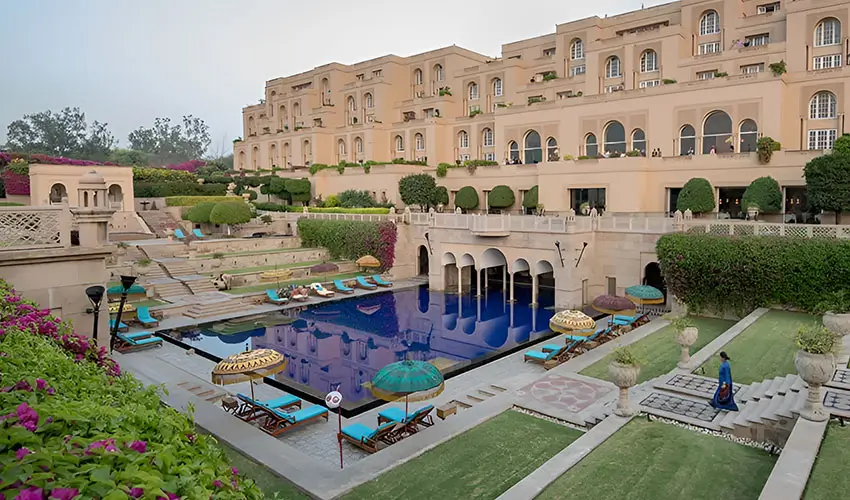
The Oberoi Amarvilas is the most strategically positioned hotel for a Taj Mahal visit: located 600 metres from the monument's eastern gate, with unobstructed Taj views from every room. Check in, confirm your sunrise entry permit with your guide, and spend the afternoon visiting the Agra Fort - the vast Mughal citadel on the banks of the Yamuna from whose imprisoned rooms Shah Jahan is said to have spent his final years gazing across the river at the Taj Mahal he built for his queen.
In the early evening, walk to Mehtab Bagh - the moonlit garden across the Yamuna, built by Shah Jahan as a mirror to the Taj Mahal's formal garden - for the most peaceful and photogenic view of the monument at sunset. The Taj seen across water, with the evening light shifting on its marble, is different from any view available from inside the complex.
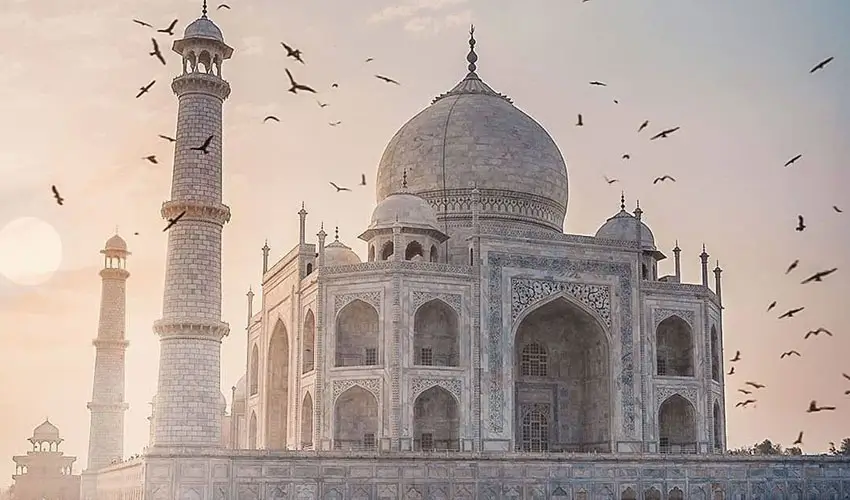
Rise before 5 am. Your private guide will collect you from the hotel and walk you to the East Gate, entering the Taj Mahal complex as it opens. In the first light - the marble moving through pale grey to rose to brilliant white as the sun climbs - with the mist still hanging over the reflecting pool and the sound of birds in the garden, the Taj Mahal is simply incomparable. No description, no photograph, no prior knowledge prepares a first-time visitor for the actual experience.
Return to the hotel for breakfast, then depart for Ranthambore.
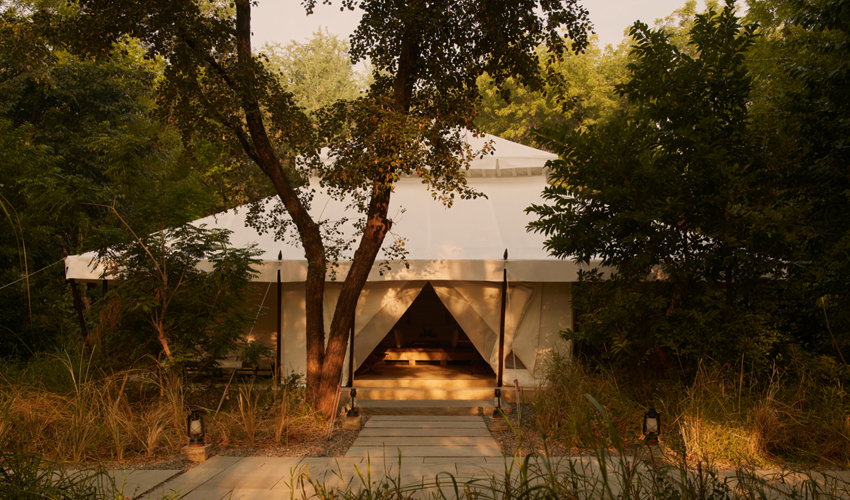
Stay: The Oberoi Vanyavilas or Taj Sawai Madhopur Lodge
Travel: Private car from Agra to Ranthambore (approximately 4 hours). En route, stop at Fatehpur Sikri - the Mughal capital abandoned in 1585, still standing almost perfectly preserved in red sandstone, and one of India's most atmospheric and undervisited UNESCO sites.
Ranthambore National Park occupies the terrain where the Aravallis meet the Vindhya hills in eastern Rajasthan. The park's relatively open landscape - dry deciduous forest with rocky outcrops, lakes, and grassland clearings - makes it one of the most rewarding tiger reserves in India for game-viewing. The ruins of a medieval fort rising from the centre of the park add an atmosphere found at no other wildlife destination in the world: tigers have been photographed on the fort's ramparts.
Day 4 afternoon - First game drive
Check into your lodge and prepare for the late-afternoon game drive (approximately 3:30–6:30 pm). Ranthambore's tigers are habituated to the presence of safari vehicles and can be found at lakes, on roads, and at rest in open glades. A naturalist guide who knows the individual animals of the park significantly increases the depth of the experience beyond the sighting itself.
Day 5 - Morning and afternoon game drives
Two drives give you the best possible chance of sightings, and also allow you to understand the park's ecology, birdlife, and landscape beyond the headline species. Ranthambore hosts leopards, sloth bears, sambar deer, jackals, and over 300 bird species including the crested serpent eagle and the painted stork. Even without a tiger sighting, a Ranthambore game drive is a complete wildlife experience.
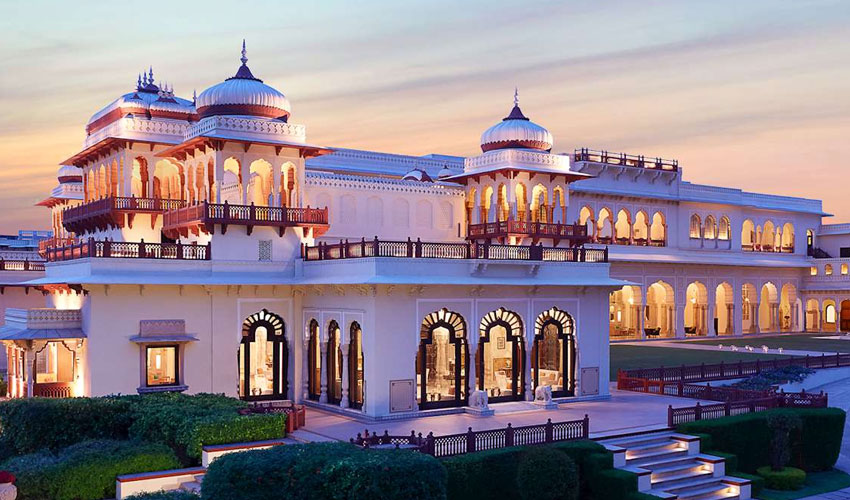
Stay: Taj Rambagh Palace or The Oberoi Rajvilas
Travel: Private car from Ranthambore to Jaipur (approximately 3 hours)
Jaipur announces itself from the first approach: a city built in pink sandstone, planned on a grid in 1727 by Maharaja Sawai Jai Singh II, and still functioning as both a living metropolis and a monument to royal ambition. The old walled city, the palaces, the bazaars, and the surrounding forts all reward two full days of exploration.
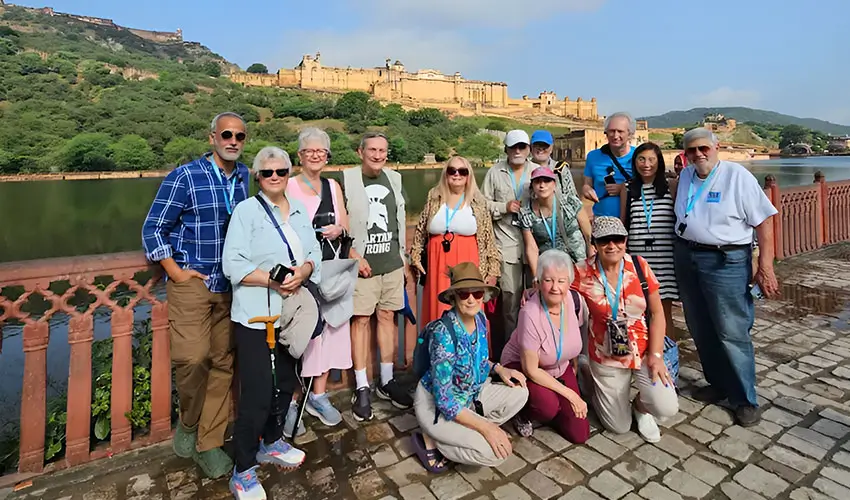
Begin the morning at Amber Fort - the Rajput citadel that served as Jaipur's capital before the city was built. A private jeep takes you up the hill to the fort entrance; a guide walks you through the Diwan-i-Aam (public audience hall), the Sheesh Mahal (hall of mirrors), and the private royal apartments, each revealing a different dimension of Rajput architectural ambition. The view from the fort's upper battlements - across the lake to the old city in the valley below - is one of Jaipur's finest.
In the afternoon, explore the old walled city on foot or by private vehicle: Hawa Mahal (the five-storey palace of winds, whose 953 small latticed windows allowed royal women to observe street life while remaining unseen), the City Palace (still partially occupied by the royal family, with museum access to extraordinary collections of weapons, textiles, and miniature paintings), and Jantar Mantar (the outdoor astronomical observatory built by Jai Singh in 1734, whose instruments measure celestial positions to an accuracy within two seconds).
The morning belongs to Jaipur's bazaars: Johari Bazaar for jewellery (Jaipur is India's gemstone capital), Bapu Bazaar for textiles and block-printed fabrics, and the narrow lanes of the old city for spices, brassware, and handicrafts. A private shopping guide can help you navigate quality from tourist-grade merchandise.
In the late afternoon, drive to Nahargarh Fort - the hilltop fortress overlooking the city - for sunset. The view of Jaipur spreading across the valley as the light fades, with Rambagh Palace visible in the gardens below and the Aravallis fading into the distance, is one of Rajasthan's great panoramas.
Stay: Taj Umaid Bhawan Palace or RAAS Jodhpur
Travel: Private car from Jaipur to Jodhpur (approximately 5 hours) or short domestic flight
Jodhpur is built around and beneath the most dramatic fort in Rajasthan: Mehrangarh, a massive sandstone citadel rising 125 metres above the old city on a sheer rocky outcrop. The old city below the fort is painted in varying shades of blue - originally a Brahmin colour code, now a visual identity the entire city has embraced.
Mehrangarh is more than a monument - it is a complete expression of Rajput military culture, artistic achievement, and historical continuity. Its collection of royal palanquins, painted howdahs, and ceremonial weapons is among the finest in India. The latticed stone windows of the zenana (women's quarters) cast extraordinary patterns of light across the interior courtyards. The fort's elevated battlements offer views over the blue city below that make it one of the most photographed vantage points in Rajasthan.
In the afternoon, explore the blue lanes of the old city on foot - past the clock tower market, through the narrow lanes of the Brahmin quarter where the blue houses are densest, and out to Toorji's Stepwell, a beautifully restored eighteenth-century baoli that is one of Jodhpur's most peaceful hidden spaces.
Visit Jaswant Thada - the white marble memorial to Maharaja Jaswant Singh II, built in 1899 and set in peaceful gardens beside a lake - before departing for Udaipur.
The Ultimate Two-Week India Experience
Travel through India’s most captivating destinations with a carefully curated itinerary that showcases the country's heritage, beauty, cuisine, and timeless charm.
Stay: Taj Lake Palace or The Oberoi Udaivilas
Travel: Private car from Jodhpur to Udaipur (approximately 5 hours), passing through Ranakpur to visit its extraordinary fifteenth-century Jain marble temple - 1,444 individually carved pillars, no two alike, in a forest setting of complete serenity. This stop transforms the drive from a transit into an experience.
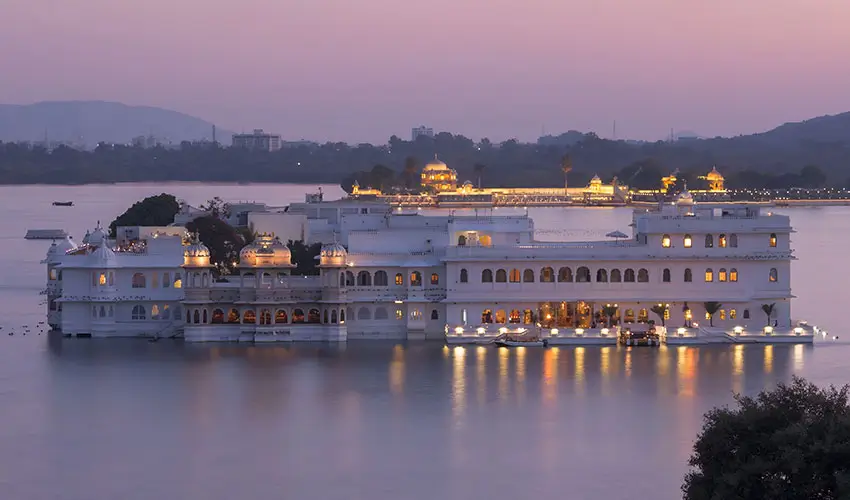
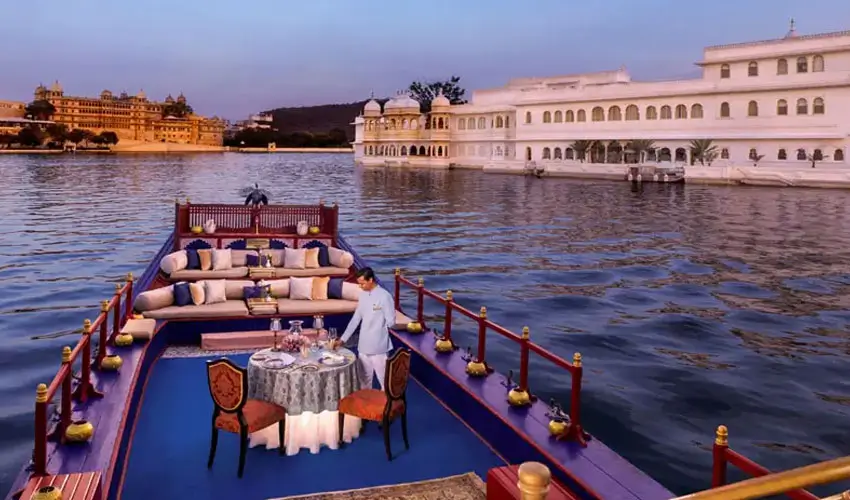
Udaipur is the most romantic city in India. Built around Lake Pichola, with the City Palace complex rising above the lake's eastern shore and the white marble Lake Palace floating in its centre, the city has an atmosphere of layered elegance that rewards both sight-seeing and simply sitting on a terrace watching the evening light change on the water.
Begin with a morning boat ride on Lake Pichola - the most peaceful way to absorb the city's lakeside geometry. The City Palace complex, the largest royal residence in Rajasthan, contains a series of interconnected courtyards, apartments, and museums spanning five centuries of Mewar dynasty history. The collections of miniature paintings, crystal dining sets, and ceremonial objects are among the finest in the state.
In the evening, a sunset dinner at a rooftop restaurant in the old city - with the Lake Palace glowing white against a darkening sky - is one of the definitive India travel experiences.
Spend the morning exploring Udaipur's old city on foot: the Jagdish Temple, the ghats along the lake shore, the narrow lanes of the Mandi market, and the Saheliyon ki Bari - the garden of the maids of honour, built by Maharana Sangram Singh in the eighteenth century and still a place of exceptional stillness and ornamental beauty.
After lunch, fly from Udaipur to Kochi.
Stay: Brunton Boatyard or CGH Earth Eighth Bastion
Travel: Domestic flight from Udaipur to Kochi (approximately 2 hours)
Kochi is where India's story of global encounter is most legible. Fort Kochi, the old colonial quarter, holds the physical traces of Portuguese, Dutch, British, Jewish, and Arab presence - all layered upon a landscape of Chinese fishing nets, spice warehouses, and Keralan Christian churches that have been here since the first century.
The afternoon is for walking Fort Kochi's compact historic quarter: St. Francis Church (the oldest European church in India, where Vasco da Gama was initially buried in 1524), the Dutch Palace at Mattancherry (whose murals depicting scenes from the Ramayana are among the finest examples of Kerala mural painting), and the Paradesi Synagogue in Jew Town - the oldest active synagogue in the Commonwealth.
In the evening, attend a Kathakali performance - the elaborate dance-drama form of Kerala, with its extraordinary painted faces and precisely codified gestures - at one of Fort Kochi's cultural venues. Pre-show talks explaining the costumes and story significantly deepen the experience.
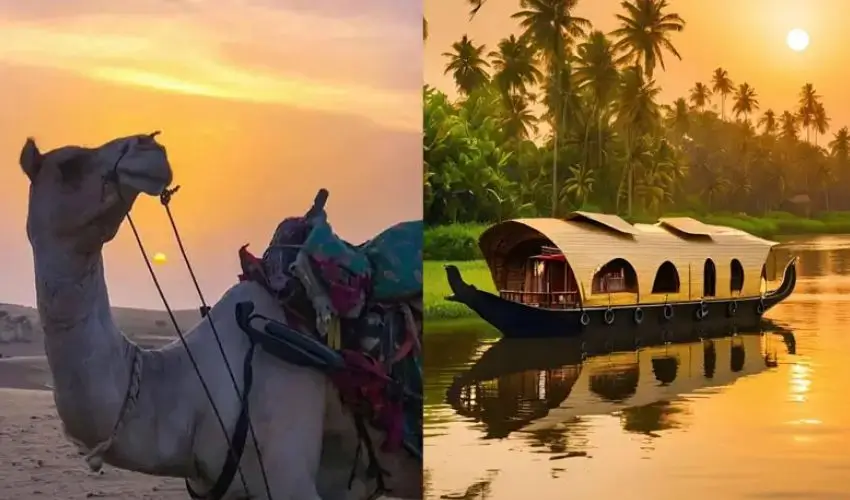
Stay: Private luxury houseboat (kettuvallam) on the backwaters
Travel: Private car from Kochi to Alleppey (approximately 1.5 hours)
The Kerala backwaters are one of those travel experiences - like the Taj Mahal at sunrise or a Bengal tiger in Ranthambore - that simply cannot be replicated anywhere else on earth. A network of coastal lagoons, lakes, rivers, and canals stretching across Kerala's coastline, the backwaters sustain a web of village life that has changed very little over generations.
A private luxury houseboat - a converted rice barge fitted with air-conditioned bedrooms, a fully equipped kitchen, and an open sun deck - gives you this landscape at the most intimate possible pace. Your cook prepares Kerala meals from local produce: fish curry, prawn moilee, puttu with coconut chutney, appam with stew. The boat moves through village channels where children wave from school steps and toddy-tappers climb coconut palms.
The evening mooring - usually in a quiet canal away from other boats, with the stars extraordinary over flat water - is one of the most peaceful nights available anywhere in India travel.
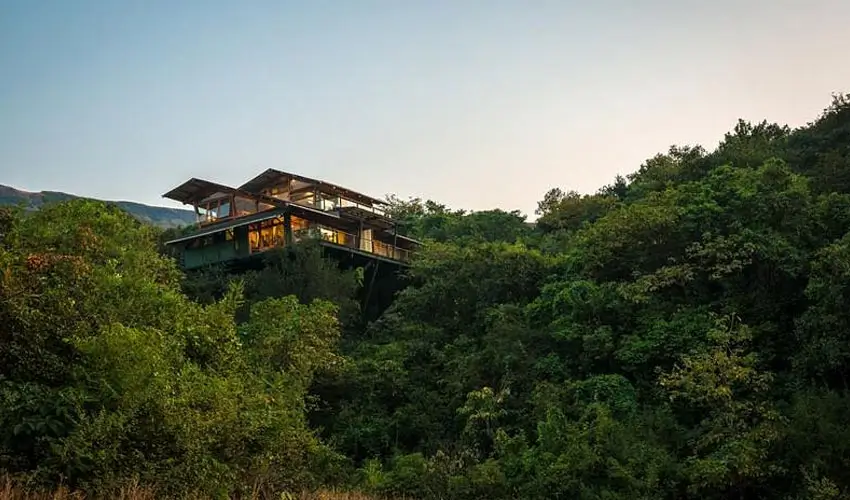
Stay: Windermere Estate or The Tall Trees
Travel: Private car from Alleppey to Munnar (approximately 4 hours, climbing through the Western Ghats)
The final day of the itinerary is a deliberate change of register: from the flat, water-threaded landscape of the backwaters into the mist-covered hills of Munnar at 1,600 metres, where the slopes are a continuous carpet of tea bushes and the air is cool and clean. After thirteen days of heat, monuments, and movement, Munnar's stillness is genuinely restorative.
A morning walk through the tea estates - with a guide who explains the growing, picking, and processing of Darjeeling and orthodox-grade teas - is both informative and quietly beautiful. The afternoon can be spent at leisure on the estate, or visiting the Eravikulam National Park if Nilgiri tahr sightings appeal.
From Munnar, a private car takes you to Kochi International Airport for your departure flight home.
The route above is a framework, not a fixed template. Every private journey we design at Top India Luxury Tours begins with the question: what kind of traveler are you, and what do you want India to give you?
For wildlife enthusiasts: Replace Days 8–9 in Jodhpur with an additional two nights at Ranthambore, or add Jawai Leopard Camp between Jodhpur and Udaipur for leopard tracking in the Aravalli foothills - one of India's most distinctive and undervisited wildlife experiences.
For spiritual seekers: Add two nights in Varanasi between Agra and Ranthambore. A dawn boat journey on the Ganges and the evening Ganga Aarti ceremony at Dashashwamedh Ghat create an entirely different dimension of the India experience.
For honeymooners: Upgrade to suite categories at Rambagh Palace or Taj Lake Palace, add a private candlelit dinner at the Taj Mahal complex at dusk (available by special arrangement), and build in a private sunset cruise on Lake Pichola with dinner served on board.
For photography travelers: Extend the Rajasthan section to include Jaisalmer (the golden desert fort city) and the painted haveli towns of the Shekhawati region, where frescoed merchant mansions cover every exterior wall with scenes from mythology and royal life.
| Night | City | Recommended Property |
| 1–2 | Delhi | The Oberoi New Delhi / Taj Mahal Hotel |
| 3 | Agra | The Oberoi Amarvilas |
| 4–5 | Ranthambore | The Oberoi Vanyavilas |
| 6–7 | Jaipur | Taj Rambagh Palace / Oberoi Rajvilas |
| 8–9 | Jodhpur | Taj Umaid Bhawan Palace / RAAS Jodhpur |
| 10–11 | Udaipur | Taj Lake Palace / Oberoi Udaivilas |
| 12 | Kochi | Brunton Boatyard |
| 13 | Alleppey | Private Luxury Houseboat |
| 14 | Munnar | Windermere Estate |
October to March is the ideal window for this itinerary. Temperatures across the north - Delhi, Agra, Rajasthan - are comfortable during the day and pleasantly cool at night. Wildlife visibility in Ranthambore is at its best from November through April, when vegetation is dry and animals concentrate around water. Kerala is comfortable year-round, though the monsoon (June–September) brings heavy rain to the backwaters.
December and January are the peak months and bring the finest weather, but also higher prices and greater competition for bookings at flagship properties. October, November, February, and March offer excellent conditions with slightly more availability.
Enquire now and connect with a dedicated Travel Expert who will respond within 24 hours to begin crafting your private journey.

Dev
Travel Expert
12+ yrs experience

Have a look at our original experiences and then contact us with your questions, or call +91-9351360903

Our Experts will send you a detailed holiday itinerary specified to your desires. It's our service promise to you.

Tailor-made doesn't mean expensive! Ask about our price promise and book with financial security.
Fourteen days is enough for a deeply meaningful first journey to India - but only if the itinerary is designed with intention. Two weeks allows you to experience three to five major destinations with enough time in each to go beyond the obvious. It is not enough to see all of India, which is really the point: India is not a destination you "complete." Two weeks gives you a genuine introduction and, for almost all travelers, the desire to return and go deeper.
The route that works best for most international first-timers combines the Golden Triangle (Delhi, Agra, Jaipur) with Rajasthan's royal cities (Jodhpur and Udaipur) and a southern counterpoint in Kerala. This route offers the iconic Mughal monuments, Rajput palaces and desert landscapes, royal wildlife safari, and the tropical backwaters - a range of experience that gives a genuine sense of India's diversity within a manageable geography.
On a luxury private itinerary, most travel within Rajasthan is by private air-conditioned car with a dedicated driver. Key longer legs - Udaipur to Kochi, for example - are covered by domestic flights, which are efficient and affordable. The Agra to Delhi connection can optionally be made by the Gatimaan Express train, which covers the distance in under two hours and is a worthwhile experience. A well-designed itinerary balances road travel (which allows you to see the landscape and stop at points of interest en route) with flights for the longer distances.
The cost varies significantly depending on the tier of accommodation chosen, the season of travel, and the specific inclusions. As a general guide, a premium luxury private itinerary - staying at Oberoi and Taj flagship properties, with private guides, a dedicated vehicle, and all transfers - typically ranges from USD 8,000 to USD 15,000 per person for two weeks. Ultra-luxury options - private villa upgrades, helicopter transfers, exclusive experiences - can exceed this significantly. Speak with a specialist for a transparent, tailored quote.
Without exception. The Taj Mahal is one of those monuments - like Machu Picchu or the Colosseum - that surpasses every expectation. Unlike many of the world's most famous sites, the Taj does not disappoint: standing before it for the first time, particularly at sunrise or in early morning light, is a genuinely transformative experience. No 14-day India itinerary that omits the Taj Mahal would be considered complete.
The Oberoi Amarvilas in Agra is the definitive answer. Located 600 metres from the Taj Mahal's east gate, the hotel was designed with unobstructed Taj views from every room and suite. Guests can watch the monument change colour through the day without leaving the property - from their balcony, from the pool terrace, or from the candlelit dining room in the evening. No other hotel offers this level of visual connection to the monument.
Yes. Most international visitors require a visa to enter India. Citizens of over 150 countries are eligible for an e-Visa, applied for online through the official Indian government portal at indianvisaonline.gov.in. Approval typically takes 72 hours. A tourist e-Visa allows stays of 30 or 90 days depending on nationality. Apply at least one week before departure to allow processing time.
Yes, with appropriate care. On a curated luxury itinerary, all meals are taken at carefully selected restaurants and heritage dining rooms with high hygiene standards. Drinking bottled or filtered water is advisable throughout. The cuisine at India's finest restaurants and palace hotels is outstanding - Indian food at this level is among the most complex and refined culinary traditions in the world - and most properties also offer international menu options for guests who want variety.
Light, breathable clothing covers most situations. Modest dress - covering shoulders and knees - is required at temples and religious sites, so carry a light scarf or pashmina. Comfortable walking shoes that cope with uneven surfaces are essential at fort and palace sites. Bring a basic medical kit including stomach medication, antihistamines, and sunscreen. Most luxury hotels provide laundry services and high-quality amenities, so packing lightly and travelling with carry-on is achievable even on a two-week itinerary.
The most efficient connection is a short domestic flight from Udaipur or Jodhpur to Kochi International Airport. Flight time is approximately two hours, and Indian domestic airlines - IndiGo, Air India, and Vistara - operate multiple daily connections. In some seasons, a brief connection through Mumbai is required. A good tour operator will book these flights as part of the overall itinerary, timing them to make the best use of travel days.
For most guests, the night spent on a private luxury houseboat on the Kerala backwaters is the experience they describe most vividly after returning home. The combination of absolute stillness, extraordinary food prepared fresh on the boat, village life visible from the water, and the extraordinary clarity of the stars over flat water creates something that cannot be replicated in any hotel, however fine. The backwaters section of the itinerary is a deliberate and essential counterpoint to the forts and palaces of Rajasthan.
The single most important first step is a conversation with a specialist India travel designer who can match the itinerary to your specific travel dates, interests, and expectations. Key decisions include the season of travel, the balance between heritage and wildlife, preferred hotel categories, dietary requirements, pace preferences, and whether any additional experiences - photography, cooking classes, wellness retreats - should be incorporated. At Top India Luxury Tours, every private journey begins with exactly this conversation - because the best India itinerary is the one that was designed specifically for you.