Royal Palace Stays in India
17 Sep 2025
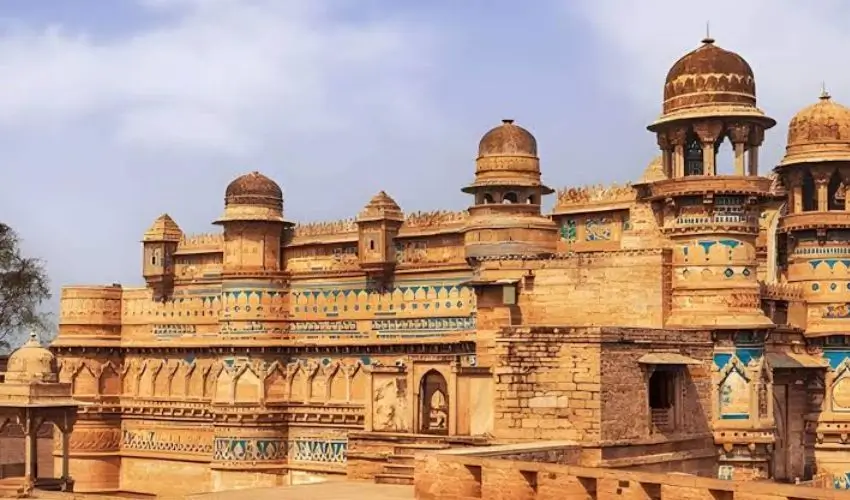
For many travelers, India is not simply a destination. It is a living museum spanning thousands of years of human civilization. Few countries on earth offer such an extraordinary concentration of ancient cities, archaeological treasures, dynastic capitals, religious monuments, royal palaces, medieval forts, colonial architecture, and UNESCO World Heritage Sites.
While wildlife enthusiasts travel to India for tigers and nature lovers come for the Himalayas or Kerala's backwaters, history and archaeology enthusiasts often find themselves captivated by something even more remarkable: the sheer depth of India's past.
Every region tells a different story. Ancient Buddhist universities once attracted scholars from across Asia. Powerful Hindu kingdoms built temple complexes that continue to astonish architects today. Mughal emperors created some of the world's most celebrated monuments. Rajput rulers transformed desert landscapes into fortified cities, while colonial powers left behind another layer of architectural and cultural influence.
What makes India especially rewarding for history lovers is that its heritage remains alive. Unlike archaeological sites that exist purely as museum exhibits, many Indian monuments continue to function as active places of worship, cultural centers, and community gathering spaces. Travelers are not simply observing history—they are experiencing how it continues to shape daily life.
For serious history enthusiasts, a private chauffeur-driven journey offers the ideal way to explore these treasures. It allows travelers to move comfortably between regions, spend additional time at important sites, and follow a route designed around historical interests rather than standard tourism schedules.
A well-planned heritage journey through India can easily rival the historical experiences offered by Egypt, Italy, Greece, Turkey, or China. In many ways, it provides something even more remarkable: the opportunity to witness multiple civilizations, religions, empires, and cultural traditions within a single country.
One of the biggest surprises for first-time visitors is the sheer scale of India's historical timeline. Many travelers arrive expecting to see famous landmarks such as the Taj Mahal or Jaipur's palaces. What they quickly discover is that India's history extends far beyond these iconic attractions.
The Indian subcontinent has been home to some of the world's oldest urban civilizations. Archaeological discoveries continue to reveal evidence of sophisticated societies that flourished thousands of years before many European kingdoms existed. Ancient trade networks connected India with Central Asia, the Middle East, Southeast Asia, and beyond, creating a rich exchange of ideas, religions, art, and technology.
For history enthusiasts, India offers the rare opportunity to trace multiple eras within a single journey. Travelers can move from ancient Buddhist sites to medieval temple complexes, from Mughal architecture to colonial districts, all within a matter of days. Each region reveals a different chapter in the story of human civilization.
Another factor that distinguishes India is the remarkable preservation of living heritage. Temples built centuries ago still attract worshippers. Forts that once housed royal courts remain active cultural spaces. Historic neighborhoods continue to function as thriving communities rather than preserved museum zones.
The diversity of historical experiences is extraordinary. Travelers interested in archaeology, architecture, religion, military history, trade networks, art history, or ancient civilizations all find material that can occupy weeks of exploration. Even experienced travelers who have visited major historical destinations elsewhere often describe India as uniquely rewarding because of the depth and variety of its heritage.
A journey through India's historical landscape is not simply educational. It is immersive, emotional, and often deeply moving. The stories embedded within its monuments continue to resonate long after travelers return home.
No history-focused journey through India can begin anywhere other than Delhi. For serious history and archaeology enthusiasts, Delhi is not simply a capital city. It is a vast historical landscape where multiple civilizations, dynasties, and empires have left their mark over more than a thousand years. Few cities in the world possess such a dense concentration of historical layers.
What makes Delhi particularly fascinating is that it has been rebuilt repeatedly throughout history. Successive rulers established new capitals, constructed monumental architecture, and transformed the urban landscape according to their political ambitions and cultural influences. As a result, modern Delhi contains the remains of several historic cities, each representing a different era of Indian history.
For archaeology enthusiasts, sites such as the Qutub Complex provide insight into the early Delhi Sultanate period. The Qutub Minar itself stands as one of the most remarkable surviving monuments of medieval India, while surrounding ruins reveal the architectural transition that occurred during the establishment of Islamic rule in North India.
Humayun's Tomb offers another extraordinary chapter in architectural history. Often regarded as the precursor to the Taj Mahal, the monument introduced design concepts that would later reach their highest expression during the Mughal period. Walking through its gardens and exploring its symmetry allows visitors to appreciate the evolution of Mughal architecture before the construction of India's most famous monument.
Old Delhi presents yet another historical layer. The Red Fort and Jama Masjid symbolize the power and sophistication of the Mughal Empire at its peak. The surrounding streets continue to function as vibrant commercial districts, creating an atmosphere where history and modern life coexist in fascinating ways.
Even colonial history is strongly represented through New Delhi's grand avenues, government buildings, and urban planning. Designed during British rule, this district reflects a completely different architectural and political vision.
For history lovers, Delhi is not a city that can be understood in a single day. It serves as an introduction to the broader historical narrative of India and provides essential context for every destination that follows.
While many travelers associate Agra exclusively with the Taj Mahal, history enthusiasts quickly discover that the city offers much more than a single monument. Agra was once one of the most important cities in the Mughal Empire and played a central role in shaping the political, cultural, and architectural history of South Asia.
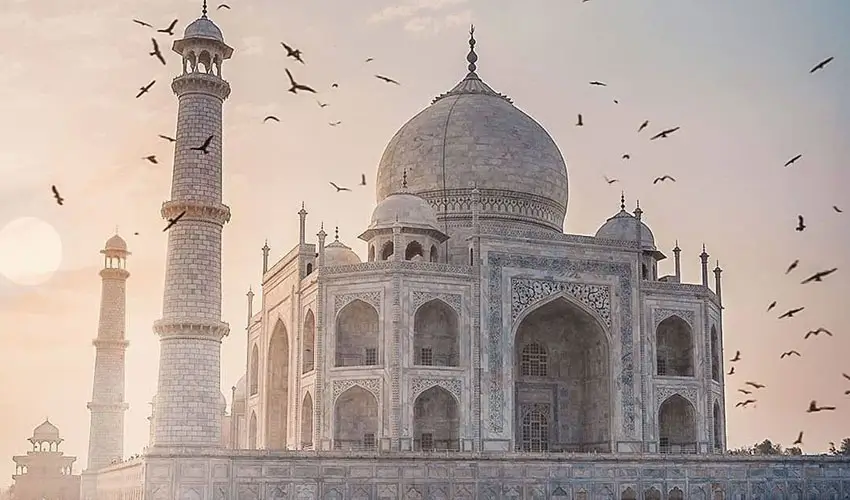
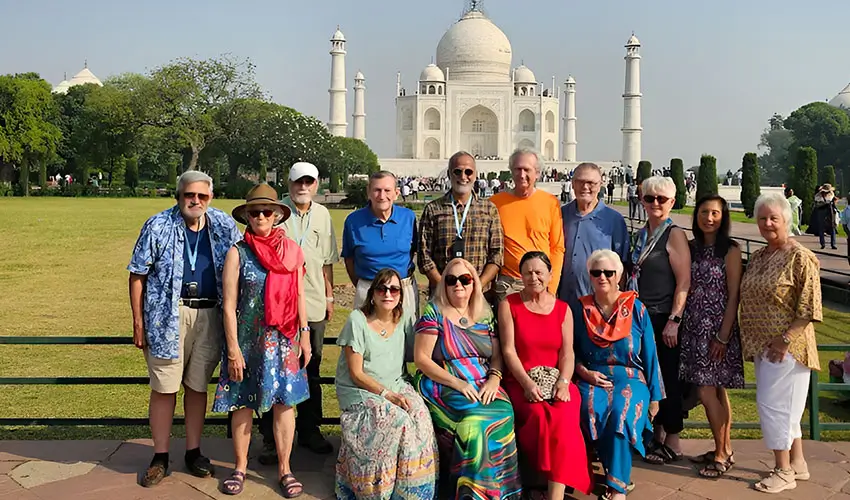
The Taj Mahal remains the obvious highlight. However, approaching it solely as a romantic monument overlooks its immense historical significance. Built during the reign of Shah Jahan, it represents the culmination of centuries of architectural development influenced by Persian, Central Asian, and Indian traditions. Every aspect of its design reflects the sophistication of the Mughal court and the resources available to one of the most powerful empires of its era.
Equally important is Agra Fort. This vast red sandstone fortress served as the primary seat of Mughal power before the capital shifted to Delhi. Walking through its palaces, audience halls, courtyards, and defensive structures provides valuable insight into how the empire functioned. Unlike many forts that survive only as ruins, Agra Fort remains remarkably intact and allows visitors to imagine life within one of the world's most influential royal courts.
Archaeology enthusiasts also appreciate lesser-known sites such as Itmad-ud-Daulah, often referred to as the "Baby Taj." This monument represents an important stage in the evolution of Mughal architecture and demonstrates how design concepts developed before reaching perfection in the Taj Mahal.
For travelers interested in imperial history, Agra offers an unparalleled opportunity to understand the ambitions, achievements, and cultural legacy of the Mughal Empire. Rather than serving merely as a stop to photograph the Taj Mahal, the city becomes a key chapter in India's broader historical narrative.
If Delhi tells the story of empires and Agra reveals Mughal grandeur, Jaipur introduces travelers to the remarkable history of the Rajput kingdoms. The city represents one of the most successful examples of royal urban planning in pre-modern India and remains among the country's most important historical destinations.
Founded in the eighteenth century, Jaipur was designed according to sophisticated architectural and scientific principles. Unlike many ancient cities that evolved organically, Jaipur was carefully planned as a royal capital. Its wide streets, organized markets, and geometric layout reflected advanced urban thinking that was highly innovative for its time.
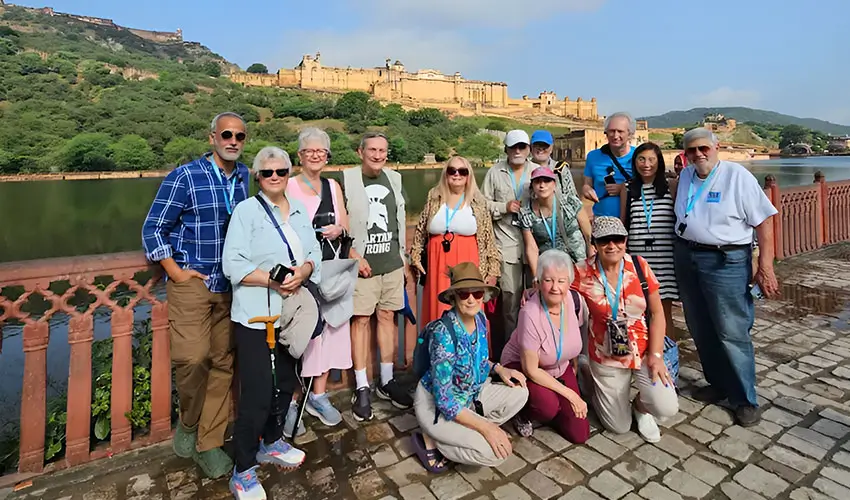
For history enthusiasts, the city's monuments reveal the political and cultural achievements of Rajput rulers. Amber Fort, situated outside the city, demonstrates how strategic defensive architecture could coexist with remarkable artistic sophistication. The fort's palaces, courtyards, audience halls, and decorative details reveal a world where military strength and refined culture were equally important.
Within Jaipur itself, the City Palace remains one of India's finest royal complexes. Unlike many historic palaces that function solely as museums, parts of the complex continue to maintain connections with the former royal family. Visitors gain insight into courtly life, ceremonial traditions, and the administrative systems that governed one of Rajasthan's most influential kingdoms.
Jantar Mantar introduces another fascinating dimension of Rajput history. This UNESCO World Heritage Site contains monumental astronomical instruments that demonstrate the scientific interests of Jaipur's rulers. Long before modern technology existed, these structures were used to track celestial movements with remarkable precision.
For archaeology and history enthusiasts, Jaipur offers far more than beautiful architecture. It provides an opportunity to understand how regional kingdoms developed sophisticated political, military, scientific, and cultural systems while interacting with larger imperial powers such as the Mughals.
For travelers interested in archaeology, art history, and ancient architecture, Khajuraho represents one of India's most extraordinary historical destinations. Located in the central Indian state of Madhya Pradesh, the temples of Khajuraho stand as remarkable examples of artistic achievement from the Chandela dynasty, which ruled the region between the ninth and thirteenth centuries.
What immediately distinguishes Khajuraho from many other heritage sites is the extraordinary detail of its sculptures. Every wall, pillar, and surface appears alive with movement. Musicians, dancers, warriors, gods, celestial beings, royal processions, and scenes from daily life are carved into stone with astonishing precision. While many international visitors arrive expecting only to see the famous erotic sculptures, they quickly discover that these carvings represent only a small fraction of a much larger artistic and cultural narrative.
For archaeology enthusiasts, Khajuraho offers valuable insight into medieval Indian society. The temples reveal information about religious practices, clothing, jewelry, music, architecture, social customs, and artistic traditions that flourished nearly a thousand years ago. Few archaeological sites in the world provide such a detailed visual record of everyday life from a historical period.
The engineering achievements are equally impressive. Massive sandstone blocks were assembled without modern machinery, creating structures that have survived centuries of political change, climatic conditions, and natural aging. Walking through these temple complexes allows visitors to appreciate not only artistic excellence but also the technical expertise of their builders.
Unlike crowded urban monuments, Khajuraho offers a more peaceful atmosphere that encourages careful observation. History lovers often spend hours studying individual carvings and architectural details. Every section reveals new discoveries, making the site particularly rewarding for travelers who enjoy exploring beyond surface-level sightseeing.
For anyone interested in archaeology, Khajuraho demonstrates how architecture can serve as both a religious expression and a historical document, preserving centuries of cultural memory within stone itself.
Among India's most important archaeological treasures, Sanchi occupies a special place in world history. Long before Buddhism spread across Asia, influencing cultures from Sri Lanka to Japan, it flourished in the Indian subcontinent. Sanchi preserves some of the earliest and most significant evidence of that development.
The Great Stupa of Sanchi is one of the oldest surviving stone structures in India and remains one of the most important Buddhist monuments in the world. Originally commissioned during the reign of Emperor Ashoka in the third century BCE, the site evolved over centuries into a major religious and educational center.
For history enthusiasts, Sanchi provides an opportunity to explore a period that predates many of India's more famous monuments. The site belongs to an era when Buddhism was emerging as a major intellectual and spiritual force. Its gateways, known as toranas, are masterpieces of narrative sculpture that depict stories from the life of Buddha and important episodes from Buddhist tradition.
What makes Sanchi particularly fascinating is the simplicity and elegance of its design. Unlike later temple complexes characterized by intricate decoration, Sanchi reflects an earlier architectural philosophy focused on symbolism, harmony, and spiritual meaning. Archaeologists continue to study the site because it offers invaluable insight into the development of Buddhist art and religious architecture.
Visitors often describe a sense of tranquility that distinguishes Sanchi from more crowded tourist destinations. The surrounding landscape remains peaceful, allowing travelers to appreciate the site's historical significance without distraction. This atmosphere makes it easier to imagine how ancient pilgrims may have experienced the monument centuries ago.
For travelers interested in religious history, archaeology, and the spread of ideas across civilizations, Sanchi provides one of the most important chapters in India's historical narrative.
Few destinations in the world offer the historical continuity found in Varanasi. Frequently described as one of the oldest continuously inhabited cities on Earth, Varanasi presents a unique challenge for historians and archaeologists because its ancient past remains inseparable from its living present.
Unlike archaeological sites preserved as ruins, Varanasi continues to function as a vibrant urban center where traditions practiced thousands of years ago remain part of daily life. Pilgrims arrive from across India, ceremonies take place along the riverfront, temples remain active, and narrow lanes continue to serve communities much as they have for centuries.
For history lovers, the city's greatest significance lies in its continuity. While many ancient civilizations disappeared or transformed beyond recognition, Varanasi maintained its role as a spiritual and cultural center through numerous political and historical changes. Empires rose and fell, yet the city remained a focal point of religious and intellectual life.
The ghats lining the Ganges River form one of the world's most remarkable historical landscapes. These stone steps descending to the water have witnessed centuries of ceremonies, trade, education, and community activity. Walking through the city reveals layers of architecture, culture, and history accumulated over generations.
Archaeological discoveries in and around Varanasi continue to provide evidence of ancient settlement patterns and cultural development. However, the city is perhaps most fascinating because history remains visible not only in monuments but also in traditions, rituals, and everyday activities.
For travelers seeking to understand India's historical depth, Varanasi offers an experience that cannot be replicated elsewhere. It demonstrates how heritage can remain alive and relevant rather than existing solely within museums or archaeological sites.
Among the most astonishing archaeological achievements in Asia, the caves of Ajanta and Ellora stand as enduring evidence of India's artistic and engineering brilliance. Carved directly into rock cliffs over many centuries, these UNESCO World Heritage Sites represent some of the finest examples of ancient craftsmanship anywhere in the world.
Ajanta is particularly famous for its Buddhist caves, many of which contain surviving paintings that offer rare insight into ancient artistic traditions. These murals depict religious themes, courtly life, trade networks, and cultural interactions, providing historians with invaluable information about the period in which they were created.
Ellora presents an even broader historical narrative. Here, Buddhist, Hindu, and Jain monuments coexist within a single complex, reflecting centuries of religious and cultural interaction. The most remarkable structure is the Kailasa Temple, a monumental rock-cut temple carved from a single piece of stone. Its scale and complexity continue to astonish architects and engineers today.
For archaeology enthusiasts, these sites offer far more than visual beauty. They reveal information about religious development, artistic techniques, political patronage, and cultural exchange. The precision achieved by ancient craftsmen working with limited tools remains one of the great mysteries of architectural history.
Exploring Ajanta and Ellora requires time and patience. Every cave contains details that reward close observation. Sculptures, inscriptions, paintings, and architectural forms combine to create one of the richest archaeological experiences available in India.
For many historians and archaeologists, Hampi represents the most spectacular archaeological destination in India. Once the capital of the Vijayanagara Empire, one of the most powerful kingdoms in South Asian history, Hampi today consists of a vast landscape of ruins spread across dramatic rocky terrain.
Unlike individual monuments such as the Taj Mahal or Khajuraho, Hampi is an entire historical city. Temples, marketplaces, royal compounds, water systems, fortifications, and ceremonial spaces extend across a remarkable area, allowing visitors to appreciate the scale of a once-thriving imperial capital.
What makes Hampi particularly fascinating is the combination of architecture and landscape. Massive granite boulders create a dramatic natural setting that enhances the visual impact of the ruins. The result is one of the most photogenic archaeological sites in the world.
For history enthusiasts, Hampi provides insight into a period often overlooked by international travelers. The Vijayanagara Empire played a crucial role in shaping South Indian history, trade networks, culture, and politics. Archaeological remains reveal a sophisticated urban civilization capable of supporting large populations and complex economic systems.
Visitors frequently spend several days exploring the site because of its immense scale. Every section reveals new discoveries, from intricately carved temples to impressive engineering works designed to manage water resources. Few destinations reward historical curiosity as richly as Hampi.
History-focused travel often requires flexibility, time, and access to destinations located far beyond major cities. A private chauffeur-driven vehicle allows travelers to connect UNESCO sites, archaeological regions, and historical cities in a seamless manner.
Unlike fixed itineraries or public transportation schedules, private travel allows visitors to spend additional time at important sites, stop at lesser-known monuments, and explore regional museums, villages, and historical landscapes that many tourists miss entirely.
For serious history enthusiasts, the journey between destinations becomes almost as important as the sites themselves. Rural landscapes, ancient trade routes, historic towns, and cultural encounters provide valuable context that enhances understanding of India's past.
A carefully designed heritage route connecting Delhi, Agra, Jaipur, Khajuraho, Sanchi, Varanasi, Ajanta, Ellora, and Hampi creates one of the most rewarding historical journeys available anywhere in the world. Few countries offer such extraordinary chronological and cultural diversity within a single itinerary.
Enquire now and connect with a dedicated Travel Expert who will respond within 24 hours to begin crafting your private journey.

Dev
Travel Expert
12+ yrs experience

Have a look at our original experiences and then contact us with your questions, or call +91-9351360903

Our Experts will send you a detailed holiday itinerary specified to your desires. It's our service promise to you.

Tailor-made doesn't mean expensive! Ask about our price promise and book with financial security.
Each site offers unique value, but many historians consider Hampi, Ajanta-Ellora, and the Taj Mahal among the most significant.
India has more than 40 UNESCO World Heritage Sites covering cultural, natural, and mixed categories.
Absolutely. Hampi is one of the largest and most impressive archaeological landscapes in Asia.
Khajuraho is famous for its intricate temple sculptures and exceptional medieval architecture.
Sanchi preserves some of the earliest surviving Buddhist monuments in the world.
Yes. They are among India's most accessible and visually impressive archaeological sites.
A comprehensive heritage journey typically requires 12 to 20 days.
Yes. It is one of the world's oldest continuously inhabited cities and remains historically significant.
A private chauffeur-driven vehicle provides the greatest flexibility and comfort.
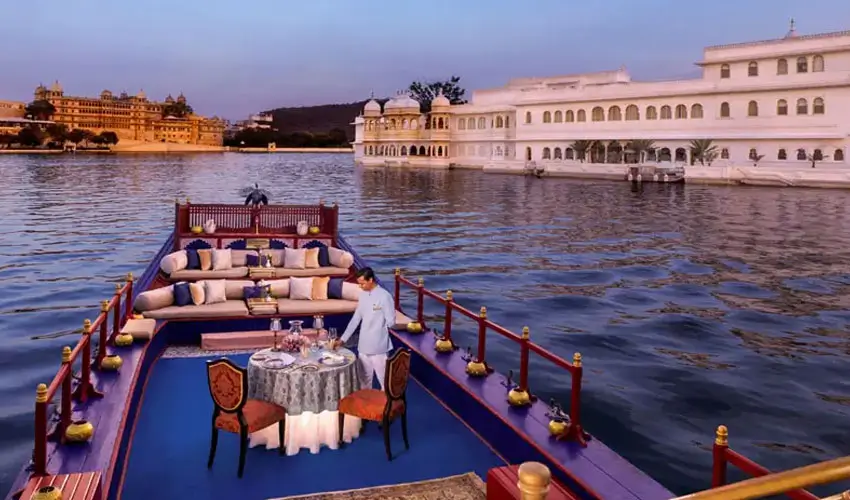
Yes. India offers exceptional luxury hotels, heritage properties, and private guided experiences alongside its historical attractions.
Sanchi, Bodh Gaya, and Ajanta are among the most important Buddhist heritage destinations.
Yes. India's historical depth, cultural diversity, and archaeological richness place it among the world's premier destinations for history enthusiasts.