Royal Palace Stays in India
17 Sep 2025

For wildlife enthusiasts, India is often associated with tigers, elephants, leopards, and iconic national parks. Yet among serious naturalists and birdwatchers, the country holds an entirely different reputation. India is widely regarded as one of the world's most rewarding birding destinations, offering extraordinary biodiversity, diverse ecosystems, and the opportunity to observe hundreds of species within a single journey.
Stretching from the Himalayas in the north to tropical coastlines in the south, from deserts in Rajasthan to wetlands in Assam, India provides habitats that support more than 1,300 bird species. This remarkable diversity places the country among the premier birdwatching destinations on the planet.
For international birders, India offers something few destinations can match: the ability to combine world-class birding with luxury travel, cultural exploration, wildlife experiences, and historical sightseeing. A well-planned journey may include mornings spent observing rare raptors, afternoons exploring UNESCO heritage sites, and evenings relaxing at luxury wilderness lodges.
January through March traditionally attracts the largest number of birdwatchers because migratory species from Europe, Central Asia, Siberia, and other regions spend the winter in India. However, birding opportunities exist throughout the year, and different seasons reveal different species and habitats.
Unlike traditional wildlife safaris focused primarily on large mammals, birdwatching encourages slower travel and deeper observation. Travelers become more aware of landscapes, ecosystems, seasonal changes, and local biodiversity. As a result, birding journeys often feel more immersive and rewarding than conventional sightseeing itineraries.
For luxury travelers interested in nature, photography, conservation, and authentic outdoor experiences, India offers one of the richest birdwatching environments available anywhere in the world.
Many international travelers underestimate India's importance within the birding community. While countries such as Costa Rica, Kenya, South Africa, and Ecuador are often celebrated for their wildlife, India quietly ranks among the world's most significant birdwatching destinations.
One reason is geography. India's position along major migratory routes means that countless birds travel through the subcontinent every year. Wetlands, forests, grasslands, mountains, deserts, rivers, coastlines, and agricultural landscapes create an extraordinary variety of habitats capable of supporting both resident and migratory species.
For birdwatchers, this diversity translates into exceptional opportunities. Within a single trip, visitors may encounter colorful kingfishers, elegant cranes, majestic eagles, hornbills, owls, parakeets, storks, vultures, flycatchers, waterbirds, and numerous endemic species found nowhere else on Earth.
The country's protected areas also contribute significantly to its reputation. National parks, wildlife sanctuaries, wetlands, biosphere reserves, and conservation areas preserve critical habitats and allow bird populations to thrive. Many of these locations remain relatively uncrowded compared to famous safari destinations elsewhere.
Another factor is accessibility. Birding opportunities are available across multiple regions, allowing travelers to select itineraries that match their interests and available time. Some visitors focus on wetlands and migratory birds, while others pursue Himalayan specialties, tropical forest species, desert birds, or endemic populations.
The combination of biodiversity, accessibility, luxury accommodations, and cultural experiences makes India uniquely attractive for birdwatchers seeking more than a traditional wildlife holiday.
For serious birdwatchers visiting India, there is one destination that consistently appears at the top of every birding list: Keoladeo National Park, commonly known as Bharatpur Bird Sanctuary. Located in Rajasthan between Delhi and Agra, this UNESCO World Heritage Site has earned an international reputation as one of the finest birdwatching locations in Asia.
What makes Bharatpur exceptional is its incredible concentration of birdlife. Unlike many wildlife destinations where visitors must search large areas for sightings, Bharatpur's wetland ecosystem attracts vast numbers of resident and migratory birds, creating opportunities for observation that are both rewarding and accessible.
For decades, the sanctuary has served as an important wintering ground for migratory birds arriving from Central Asia, Siberia, and Europe. During peak season, birdwatchers can observe hundreds of species within a relatively compact area. The park's network of wetlands, grasslands, woodlands, and shallow lakes creates ideal habitats for waterbirds, raptors, waders, and forest species.
One of the greatest advantages of Bharatpur is the pace at which birdwatching takes place. Unlike jeep safaris that cover large distances quickly, visitors often explore the sanctuary by bicycle rickshaw, walking, or cycling. This slower approach allows birders to focus on behavior, identification, photography, and observation rather than simply ticking species off a list.
The sanctuary is particularly famous for species such as painted storks, pelicans, spoonbills, sarus cranes, kingfishers, owls, eagles, herons, and countless migratory ducks. Even travelers with limited birdwatching experience frequently find themselves fascinated by the diversity and abundance of life visible throughout the park.
For international visitors undertaking a luxury Golden Triangle journey, Bharatpur fits perfectly between Agra and Jaipur, making it one of the easiest and most rewarding birding destinations to include within a broader India itinerary.
Most travelers visit Jawai for its famous leopard safaris, but experienced birdwatchers know that the region is equally remarkable for avian diversity. Located between Jodhpur and Udaipur, Jawai combines granite hills, wetlands, open scrubland, agricultural landscapes, and the Jawai Dam ecosystem to create a surprisingly rich birding environment.
Unlike heavily visited wildlife destinations, Jawai remains relatively undiscovered among international birders. This lack of mass tourism contributes to a more peaceful and immersive experience where birdwatching feels authentic and uncrowded.
The Jawai Dam serves as a magnet for numerous waterbird species. Depending on the season, birders may encounter flamingos, pelicans, cranes, storks, herons, spoonbills, and various migratory visitors. Raptors are also well represented due to the region's open terrain and rocky landscapes.
One of the most fascinating aspects of birding in Jawai is the variety of habitats available within a relatively small area. A morning may begin with waterbirds near the dam, continue through scrubland supporting smaller species, and finish among granite hills where raptors soar overhead.
Photographers particularly appreciate Jawai because the dramatic landscapes create stunning natural backdrops. Birds can often be photographed against rocky cliffs, open skies, reflective water surfaces, and golden desert light that characterize the region.
Luxury camps and boutique wilderness lodges add another dimension to the experience. Visitors can enjoy private birding excursions, personalized guiding services, and exceptional hospitality while exploring one of Rajasthan's most underrated wildlife destinations.
For travelers interested in combining birdwatching with leopard safaris, rural culture, and luxury hospitality, Jawai offers one of the most distinctive wildlife experiences available in India.
While Rajasthan offers wetlands and arid landscapes, Kerala introduces birdwatchers to an entirely different ecosystem. The state's famous backwaters, tropical forests, lakes, rivers, and coastal wetlands support a remarkable diversity of birdlife that attracts enthusiasts from around the world.
Birdwatching in Kerala feels fundamentally different from birding in northern India. The environment is lush, green, and water-rich. Coconut palms line the waterways, fishing villages dot the landscape, and tropical vegetation creates habitats for numerous resident and migratory species.
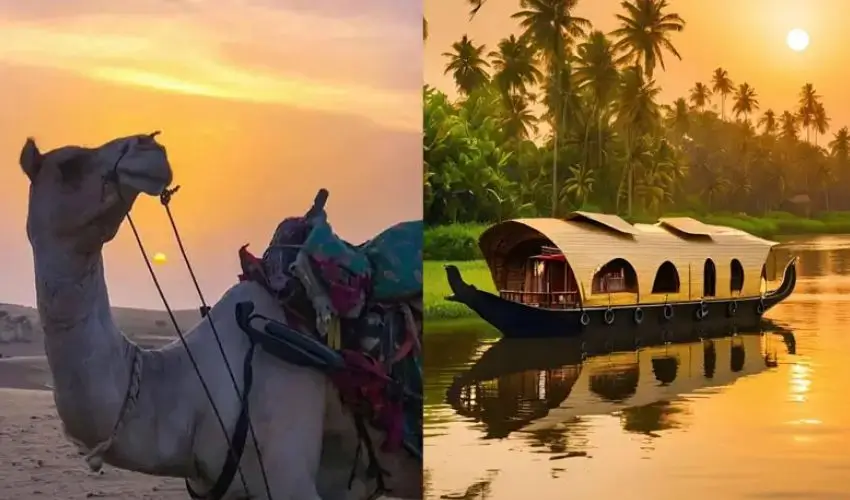
The backwaters of Kumarakom and Alleppey are particularly famous among birdwatchers. Early mornings often reveal kingfishers darting across the water, herons stalking the shoreline, cormorants drying their wings, and egrets feeding among aquatic vegetation. Larger species such as pelicans and storks are also regularly observed.
One of Kerala's greatest strengths is the opportunity to combine birdwatching with luxury travel. Houseboat cruises, lakeside resorts, and wellness retreats allow visitors to enjoy comfortable accommodations while remaining immersed in nature. Birdwatching can take place directly from resort grounds, private boats, or guided excursions into surrounding wetlands.
The region also supports numerous endemic species found only in the Western Ghats. Serious birdwatchers often extend their journeys into mountain regions such as Munnar and Thekkady, where forests host entirely different communities of birds.
For travelers seeking a relaxed birding experience combined with exceptional hospitality, tropical scenery, and cultural exploration, Kerala represents one of India's most rewarding destinations.
For experienced birdwatchers seeking rare species and extraordinary biodiversity, the Himalayan region represents the pinnacle of birding in India. Stretching across the northern edge of the country, these mountains contain ecosystems ranging from subtropical forests to alpine landscapes, each supporting unique bird populations.
The Himalayas are particularly important because they host numerous endemic and high-altitude species that cannot easily be observed elsewhere. Many international birders travel specifically to this region in search of birds that are considered highlights of global birdwatching.
The diversity is astonishing. Lower elevations support colorful pheasants, barbets, flycatchers, woodpeckers, and laughingthrushes, while higher elevations introduce species adapted to harsher mountain environments. Raptors are especially impressive, with eagles, vultures, and other birds of prey frequently seen soaring above valleys and ridges.
Beyond the birdlife itself, the scenery enhances the experience dramatically. Birdwatching takes place against a backdrop of forests, rivers, mountain villages, terraced agriculture, and snow-capped peaks. The visual beauty of the environment often rivals the wildlife itself.
Luxury travel in the Himalayas has improved significantly in recent years. Boutique lodges, mountain retreats, and carefully curated birding programs now allow visitors to explore these ecosystems without sacrificing comfort.
For serious birdwatchers, the Himalayas represent one of Asia's most important birding destinations and offer opportunities that are difficult to match anywhere else in the world.
Birdwatching differs from traditional tourism because wildlife rarely follows schedules. Species appear unexpectedly, lighting conditions change rapidly, and opportunities often emerge without warning. This unpredictability makes private transportation particularly valuable.
A chauffeur-driven vehicle allows birdwatchers to start early, remain flexible, and respond to sightings as they occur. Travelers can stop whenever interesting species appear, spend additional time in productive habitats, and adjust plans according to weather or local conditions.
Many of India's finest birding locations are also situated away from major transportation hubs. Wetlands, rural landscapes, forest edges, and wildlife reserves often require access through secondary roads that are difficult to navigate independently.
Private transportation also improves comfort during longer journeys. Birdwatchers frequently carry binoculars, cameras, spotting scopes, field guides, and photography equipment. A private vehicle provides secure storage while allowing travelers to move efficiently between habitats.
Perhaps most importantly, experienced drivers familiar with wildlife routes often become valuable contributors to the birding experience itself. Many develop a strong understanding of local ecosystems and can help identify productive areas or seasonal hotspots.
For international visitors seeking the most rewarding birdwatching experience possible, private travel provides the flexibility and convenience necessary to maximize opportunities throughout the journey.
Enquire now and connect with a dedicated Travel Expert who will respond within 24 hours to begin crafting your private journey.

Dev
Travel Expert
12+ yrs experience

Have a look at our original experiences and then contact us with your questions, or call +91-9351360903

Our Experts will send you a detailed holiday itinerary specified to your desires. It's our service promise to you.

Tailor-made doesn't mean expensive! Ask about our price promise and book with financial security.
Bharatpur's Keoladeo National Park is widely regarded as India's premier birdwatching destination.
India supports more than 1,300 bird species across its diverse ecosystems.
The winter months from November to March are particularly popular due to migratory bird activity.
Absolutely. It is considered one of Asia's most important wetland birding destinations.
Yes. India offers numerous luxury lodges, resorts, and customized birding itineraries.
Bharatpur, Jawai, Kerala backwaters, and Himalayan birding regions are all excellent choices.
Yes. Many species are found only within India or the Indian subcontinent.
Yes. The backwaters, wetlands, forests, and Western Ghats support remarkable bird diversity.
Private transportation offers flexibility, comfort, and access to remote birding locations.
Absolutely. Even first-time birdwatchers often encounter impressive species and large numbers of birds.
Yes. Many regions offer expert naturalists and specialist birding guides.
Yes. Birding combines exceptionally well with cultural tours, wildlife safaris, luxury travel, and heritage exploration.