Royal Palace Stays in India
17 Sep 2025
Running out of battery while standing in front of the Taj Mahal at sunrise, photographing a Bengal tiger during an early morning safari, navigating the streets of Old Delhi, or capturing the sunset over Udaipur's Lake Pichola is something no traveler wants to experience. Modern travel depends heavily on electronic devices. Smartphones have replaced paper maps, digital cameras preserve unforgettable memories, laptops allow remote work, and smartwatches, drones, tablets, and power banks have become standard travel companions. Before arriving in India, however, one practical question deserves attention: Will my devices work safely with India's electrical system?
Fortunately, India has a reliable electrical infrastructure across major cities and tourism destinations. Luxury hotels, heritage palaces, boutique resorts, business hotels, premium safari lodges, airports, shopping malls, cafés, and restaurants provide convenient access to electricity for charging personal devices. Most international travelers encounter very few issues, provided they understand the country's voltage standards and carry the appropriate adapter when necessary.
Unlike travel concerns that involve visas or complicated regulations, understanding India's electricity system is relatively straightforward. The majority of modern electronics such as smartphones, tablets, laptops, camera chargers, smartwatches, Bluetooth headphones, and portable gaming devices are designed to work internationally. The only difference usually involves the physical shape of the plug connecting your charger to the wall socket. This means many visitors require only a simple travel adapter rather than expensive electrical equipment.
Confusion often arises because different countries follow different electrical standards. Travelers from the United States, Canada, Japan, Mexico, and parts of Central America are accustomed to lower household voltage than India uses. Visitors from most European countries, the United Kingdom, Australia, New Zealand, Singapore, and many Asian nations generally use similar voltage standards, making compatibility much easier.
For travelers carrying expensive photography equipment, drones, laptops used for business meetings, medical devices, or multiple camera batteries, understanding the difference between travel adapters, voltage converters, and universal chargers becomes particularly important. Making the correct choice protects valuable electronics while ensuring uninterrupted travel throughout the journey.
Whether your itinerary includes the Golden Triangle, Rajasthan, Kerala, South India, wildlife safaris, Himalayan destinations, luxury trains, or private cultural tours, understanding India's electrical system before departure helps eliminate unnecessary stress. Instead of worrying about finding compatible outlets after arrival, travelers can concentrate on enjoying the journey while keeping every device fully charged and ready for the next unforgettable experience.
One of the most reassuring facts for international visitors is that India's electrical system follows well-established national standards across the country. Whether staying in a luxury hotel in Delhi, a heritage palace in Jaipur, a wildlife lodge near Ranthambore, a beachfront resort in Kerala, or a boutique hotel overlooking the Ganges in Varanasi, travelers will generally encounter the same electrical specifications. This consistency makes it much easier to prepare before departure because one adapter solution usually works throughout the entire journey.
India supplies electricity at 230 volts with a frequency of 50 Hz. These figures are important because electronic devices are designed according to specific voltage ranges. Fortunately, most modern travel electronics automatically support a wide voltage range between 100V and 240V, meaning they can safely operate in India without requiring additional voltage conversion. Smartphones, tablets, laptop chargers, camera battery chargers, smartwatches, Bluetooth speakers, wireless earbuds, portable Wi-Fi devices, e-book readers, and many other rechargeable electronics fall into this category.
Before packing, travelers should examine the small label printed on every charger. Most chargers clearly display an input specification such as Input: 100–240V, 50/60Hz. If these numbers appear, the charger automatically adjusts to India's electrical supply. In that case, only a travel plug adapter is required because the voltage itself is already compatible.
Visitors often confuse voltage compatibility with plug compatibility. These are completely different issues. Voltage refers to the electrical power supplied by the wall outlet, while the plug refers only to the physical shape connecting the charger to the socket. A device may fully support India's voltage but still require an adapter because its plug shape differs from Indian outlets.
Travelers arriving from countries using European plug standards frequently notice fewer compatibility concerns because some of their plugs fit Indian sockets without modification. Visitors from North America, however, almost always require adapters because American plug designs differ significantly from those commonly used throughout India.
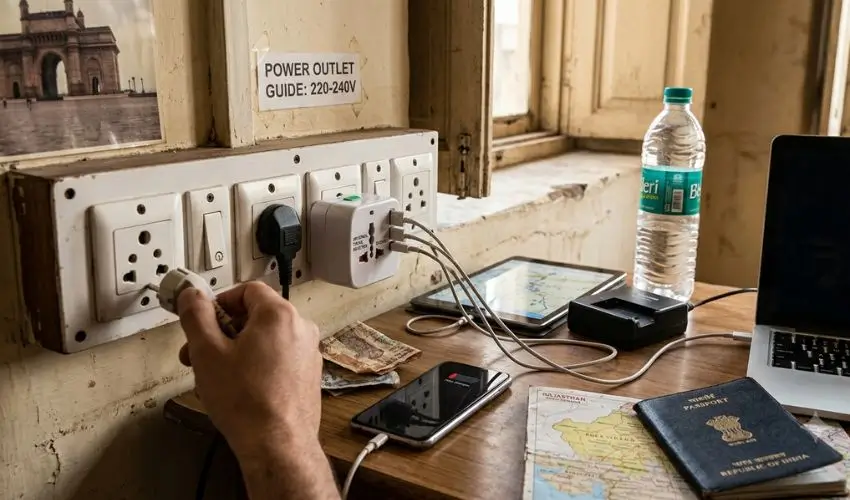
Luxury hotels deserve special mention because many internationally oriented properties have recognized the growing number of overseas guests carrying multiple electronic devices. Premium hotel rooms often include universal sockets beside the bed, near work desks, and around entertainment areas. Some properties even provide USB charging ports integrated directly into bedside power outlets, allowing smartphones and tablets to charge without separate adapters. Nevertheless, travelers should never rely entirely on hotel facilities because outlet configurations vary between properties. Carrying a lightweight universal travel adapter ensures complete flexibility regardless of accommodation category.
Electricity remains stable across major tourism destinations, although temporary power interruptions may occasionally occur during severe weather or maintenance work in certain regions. High-end hotels generally operate automatic backup generators capable of restoring electricity within seconds. As a result, international visitors staying in premium accommodations rarely experience prolonged interruptions that affect charging schedules or electronic equipment.
Another practical consideration involves carrying multiple devices. Modern travelers frequently bring smartphones, cameras, tablets, laptops, portable hard drives, drones, smartwatches, power banks, and wireless headphones. Rather than occupying several wall outlets simultaneously, many experienced travelers pack a compact USB charging station capable of charging multiple devices from one electrical outlet. This approach reduces clutter, keeps equipment organized, and minimizes the number of adapters required during the trip.
Understanding these basic electrical standards before departure allows visitors to travel confidently without worrying about damaged equipment or incompatible chargers. Most preparation simply involves confirming voltage compatibility and selecting the correct adapter, both of which are inexpensive solutions compared with replacing damaged electronics during an international vacation.
The question most international visitors ask before departure is not about voltage but about the actual wall socket they will encounter after arriving in India. Fortunately, the answer is straightforward. India primarily uses Type C, Type D, and Type M electrical plugs. While these names may sound technical, understanding their practical use makes preparing for your trip very easy.
The most commonly seen socket in hotels, apartments, cafés, airports, and modern buildings is Type C, the familiar two-round-pin design widely used across Europe and many other parts of the world. Travelers coming from countries that already use Type C plugs often need little or no additional equipment.
Traditional Indian outlets may also include Type D, a three-round-pin plug that has been used throughout the country for many decades. Some hotels and heritage properties continue using these sockets, although modern renovations increasingly include universal outlets that accept several international plug designs.
Larger appliances sometimes use Type M, another three-round-pin configuration designed for higher electrical loads. Tourists rarely need to use these outlets because personal electronics such as smartphones, laptops, cameras, tablets, and portable chargers normally connect through Type C or universal sockets.
Visitors from the United States, Canada, Mexico, and Japan should expect to carry a universal travel adapter because North American plug shapes are different from Indian outlets. Travelers from the United Kingdom, Australia, New Zealand, and several Asian countries will also generally require adapters despite having compatible voltage systems.
Many luxury hotels across India have recognized that international guests arrive from different parts of the world. Modern guest rooms frequently feature universal power outlets capable of accepting multiple plug types without requiring separate adapters. Business hotels, international hotel chains, premium resorts, and airport hotels are especially likely to provide these convenient sockets. Even so, travelers should never assume every property offers them. Carrying a compact adapter ensures complete flexibility throughout the trip.
Another useful accessory is a multi-port USB charger. Instead of filling several wall sockets with individual chargers, one adapter connected to a USB charging station can recharge multiple devices simultaneously. This becomes particularly useful for couples, families, photographers, and business travelers carrying several electronic devices.
Adapters themselves are lightweight, inexpensive, and easy to purchase before departure. Buying one in advance is generally more convenient than searching for compatible accessories immediately after arriving in a new country.
Today's international traveler rarely carries only one electronic device. A typical suitcase often includes a smartphone, DSLR or mirrorless camera, laptop, smartwatch, wireless headphones, power bank, tablet, portable Wi-Fi hotspot, e-reader, and several camera batteries. Keeping all of these devices fully charged becomes an important part of every travel day, particularly during long sightseeing schedules.
Fortunately, charging electronics in India is usually simple. Most smartphones from Apple, Samsung, Google, OnePlus, Xiaomi, and other major manufacturers already support worldwide voltage standards through their original chargers. The same applies to MacBook chargers, Windows laptop adapters, camera battery chargers from Canon, Nikon, Sony, Fujifilm, Panasonic, and GoPro charging equipment.
Photography enthusiasts should establish a regular charging routine. Camera batteries should ideally be charged every evening after returning to the hotel. Wildlife safaris often begin before sunrise and continue for several hours, making fully charged batteries essential. Travelers visiting places such as Ranthambore National Park, Bandhavgarh National Park, Kanha National Park, or Jim Corbett National Park usually carry at least two or three fully charged spare batteries to avoid missing important wildlife sightings.
Laptop users working remotely during their vacation should verify that their original charger supports 100–240V input before departure. Almost every modern laptop charger already includes automatic voltage compatibility, making additional converters unnecessary.
Drone operators should pay special attention to charging schedules because drone batteries require significantly longer charging times than smartphones. Many airlines also require lithium batteries to remain inside carry-on baggage rather than checked luggage. Travelers planning aerial photography should review airline battery regulations before departure.
Power banks provide another layer of convenience during long sightseeing days. A quality 20,000 mAh power bank can recharge most smartphones multiple times while exploring monuments, national parks, or historic cities where convenient charging opportunities may not always be available. Remember that airlines generally require power banks to remain inside cabin baggage rather than checked suitcases.
Many luxury vehicles used for private India tours also include USB charging ports or modern charging outlets. This allows passengers to recharge phones while traveling between cities, reducing dependence on hotel charging alone.
International visitors occasionally wonder whether electricity remains reliable outside India's largest cities. The answer depends largely on the type of accommodation rather than the destination itself.
Luxury heritage hotels, palace hotels, premium safari lodges, and internationally recognized resorts invest heavily in uninterrupted electrical supply because guest comfort remains a top priority. Most operate powerful backup generators capable of restoring electricity almost immediately after any temporary interruption. Visitors staying at these properties generally notice little or no disruption.
Remote wildlife lodges occasionally follow environmentally responsible energy practices. Some reduce unnecessary outdoor lighting during late-night hours to minimize disturbance to surrounding wildlife. Others supplement conventional electricity with solar power. These environmentally conscious measures rarely affect guests' ability to charge personal electronics but may slightly influence lighting schedules in certain public areas.
Historic heritage properties occasionally present another interesting situation. Beautiful palaces converted into luxury hotels often preserve original architecture while incorporating modern electrical systems. Room layouts may include fewer conveniently placed power outlets than contemporary business hotels. Packing a small extension lead or compact multi-port charger can therefore be surprisingly useful, especially for travelers carrying several devices.
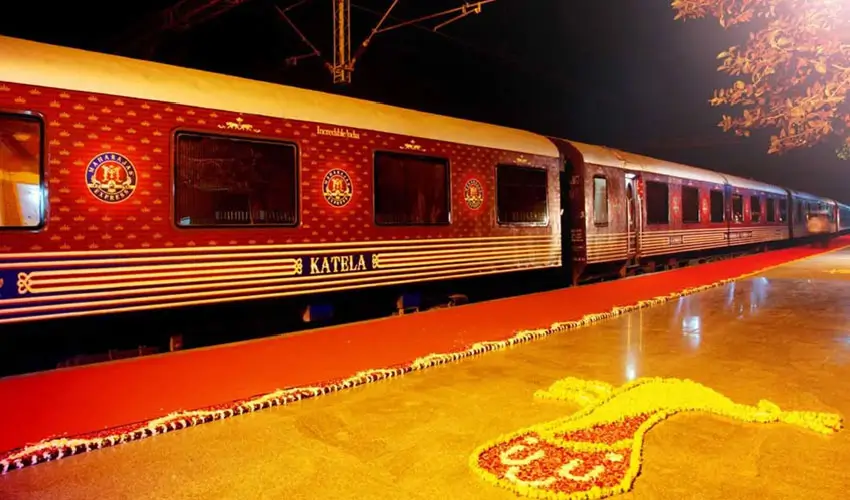
Visitors staying aboard luxury trains also benefit from in-cabin charging facilities. Premium services generally provide electrical outlets suitable for charging laptops, smartphones, cameras, and tablets throughout the journey.
Overall, international travelers rarely encounter significant charging difficulties, particularly when staying in carefully selected premium accommodations.
Protecting valuable electronics begins before leaving home. Travelers should always pack original chargers supplied by the manufacturer rather than low-quality replacement accessories. Original charging equipment generally includes superior voltage protection and better long-term reliability.
Avoid forcing incompatible plugs into wall sockets. If the plug does not fit comfortably, use the appropriate travel adapter instead of attempting unsafe alternatives.
When charging expensive cameras, laptops, drones, or external hard drives, avoid leaving equipment connected unnecessarily overnight if not required. Modern chargers automatically regulate charging, but unplugging completed devices remains a sensible safety habit.
Using certified adapters purchased from reputable manufacturers provides greater protection than inexpensive products of unknown quality. Since adapters are relatively inexpensive compared with the value of modern electronics, investing in a reliable model is worthwhile.
Travelers carrying multiple batteries should organize chargers neatly rather than overloading one outlet with numerous extension cables. Hotel rooms generally provide sufficient electrical capacity for normal personal electronics, but keeping charging equipment tidy improves safety and convenience.
Finally, packing one spare charging cable for smartphones and cameras can save considerable inconvenience. Charging cables experience frequent wear during travel, and having a replacement immediately available avoids unnecessary shopping during the vacation.
Rather than worrying about electrical compatibility, travelers who prepare with the correct universal adapter, original chargers, and a reliable power bank usually find charging electronics in India every bit as convenient as charging them at home.
Today's international traveler rarely carries only one electronic device. A typical suitcase often includes a smartphone, DSLR or mirrorless camera, laptop, smartwatch, wireless headphones, power bank, tablet, portable Wi-Fi hotspot, e-reader, and several camera batteries. Keeping all of these devices fully charged becomes an important part of every travel day, particularly during long sightseeing schedules.
Fortunately, charging electronics in India is usually simple. Most smartphones from Apple, Samsung, Google, OnePlus, Xiaomi, and other major manufacturers already support worldwide voltage standards through their original chargers. The same applies to MacBook chargers, Windows laptop adapters, camera battery chargers from Canon, Nikon, Sony, Fujifilm, Panasonic, and GoPro charging equipment.
Photography enthusiasts should establish a regular charging routine. Camera batteries should ideally be charged every evening after returning to the hotel. Wildlife safaris often begin before sunrise and continue for several hours, making fully charged batteries essential. Travelers visiting places such as Ranthambore National Park, Bandhavgarh National Park, Kanha National Park, or Jim Corbett National Park usually carry at least two or three fully charged spare batteries to avoid missing important wildlife sightings.
Laptop users working remotely during their vacation should verify that their original charger supports 100–240V input before departure. Almost every modern laptop charger already includes automatic voltage compatibility, making additional converters unnecessary.
Drone operators should pay special attention to charging schedules because drone batteries require significantly longer charging times than smartphones. Many airlines also require lithium batteries to remain inside carry-on baggage rather than checked luggage. Travelers planning aerial photography should review airline battery regulations before departure.
Power banks provide another layer of convenience during long sightseeing days. A quality 20,000 mAh power bank can recharge most smartphones multiple times while exploring monuments, national parks, or historic cities where convenient charging opportunities may not always be available. Remember that airlines generally require power banks to remain inside cabin baggage rather than checked suitcases.
Many luxury vehicles used for private India tours also include USB charging ports or modern charging outlets. This allows passengers to recharge phones while traveling between cities, reducing dependence on hotel charging alone.
International visitors occasionally wonder whether electricity remains reliable outside India's largest cities. The answer depends largely on the type of accommodation rather than the destination itself.
Luxury heritage hotels, palace hotels, premium safari lodges, and internationally recognized resorts invest heavily in uninterrupted electrical supply because guest comfort remains a top priority. Most operate powerful backup generators capable of restoring electricity almost immediately after any temporary interruption. Visitors staying at these properties generally notice little or no disruption.
Remote wildlife lodges occasionally follow environmentally responsible energy practices. Some reduce unnecessary outdoor lighting during late-night hours to minimize disturbance to surrounding wildlife. Others supplement conventional electricity with solar power. These environmentally conscious measures rarely affect guests' ability to charge personal electronics but may slightly influence lighting schedules in certain public areas.
Historic heritage properties occasionally present another interesting situation. Beautiful palaces converted into luxury hotels often preserve original architecture while incorporating modern electrical systems. Room layouts may include fewer conveniently placed power outlets than contemporary business hotels. Packing a small extension lead or compact multi-port charger can therefore be surprisingly useful, especially for travelers carrying several devices.
Visitors staying aboard luxury trains also benefit from in-cabin charging facilities. Premium services generally provide electrical outlets suitable for charging laptops, smartphones, cameras, and tablets throughout the journey.
Overall, international travelers rarely encounter significant charging difficulties, particularly when staying in carefully selected premium accommodations.
Protecting valuable electronics begins before leaving home. Travelers should always pack original chargers supplied by the manufacturer rather than low-quality replacement accessories. Original charging equipment generally includes superior voltage protection and better long-term reliability.
Avoid forcing incompatible plugs into wall sockets. If the plug does not fit comfortably, use the appropriate travel adapter instead of attempting unsafe alternatives.
When charging expensive cameras, laptops, drones, or external hard drives, avoid leaving equipment connected unnecessarily overnight if not required. Modern chargers automatically regulate charging, but unplugging completed devices remains a sensible safety habit.
Using certified adapters purchased from reputable manufacturers provides greater protection than inexpensive products of unknown quality. Since adapters are relatively inexpensive compared with the value of modern electronics, investing in a reliable model is worthwhile.
Travelers carrying multiple batteries should organize chargers neatly rather than overloading one outlet with numerous extension cables. Hotel rooms generally provide sufficient electrical capacity for normal personal electronics, but keeping charging equipment tidy improves safety and convenience.
Finally, packing one spare charging cable for smartphones and cameras can save considerable inconvenience. Charging cables experience frequent wear during travel, and having a replacement immediately available avoids unnecessary shopping during the vacation.
Rather than worrying about electrical compatibility, travelers who prepare with the correct universal adapter, original chargers, and a reliable power bank usually find charging electronics in India every bit as convenient as charging them at home.
Enquire now and connect with a dedicated Travel Expert who will respond within 24 hours to begin crafting your private journey.

Dev
Travel Expert
12+ yrs experience

Have a look at our original experiences and then contact us with your questions, or call +91-9351360903

Our Experts will send you a detailed holiday itinerary specified to your desires. It's our service promise to you.

Tailor-made doesn't mean expensive! Ask about our price promise and book with financial security.
Yes. Modern smartphones, laptops, tablets, cameras, and similar devices designed for worldwide voltage operate safely in India when used with the correct adapter.
India operates on 230V electricity with a frequency of 50 Hz.
Most travelers do not. If your charger states 100–240V, only a plug adapter is required.
India mainly uses Type C, Type D, and Type M electrical outlets.
Yes. American plugs do not normally fit Indian sockets, so a universal travel adapter is recommended.
Yes. International airports, premium hotels, business hotels, and most luxury resorts provide convenient charging facilities.
Temporary interruptions may occasionally occur, but luxury hotels generally have automatic backup generators that restore electricity quickly.
Yes. Power banks are useful during sightseeing. Airlines usually require them to remain in carry-on baggage.
Almost all modern laptop chargers support 100–240V input and work perfectly with the correct travel adapter.
A high-quality universal travel adapter combined with a multi-port USB charger is the most practical solution for keeping all travel electronics fully charged throughout the journey.