Royal Palace Stays in India
17 Sep 2025
For many first-time visitors, money is one of the most misunderstood aspects of traveling in India. Questions about cash, credit cards, currency exchange, tipping, ATMs, digital payments, and overall financial safety often arise long before travelers board their flight.
The good news is that managing money in India has become significantly easier than it was even a decade ago. Modern banking infrastructure, widespread card acceptance, improved ATM networks, luxury hospitality standards, and growing digital payment systems have transformed the travel experience for international visitors.
At the same time, India remains a country of contrasts. While luxury hotels, fine dining restaurants, and premium retailers operate within highly modern financial systems, some rural areas, local markets, and smaller businesses continue to rely heavily on cash transactions. Understanding how these different environments operate is essential for a smooth and stress-free journey.
For luxury travelers, the goal is not simply carrying enough money. It is about understanding when to use cash, when cards are appropriate, how to exchange currency efficiently, and how to avoid unnecessary fees or complications. Proper planning allows visitors to focus on enjoying their trip rather than worrying about finances.
Another important consideration is flexibility. Travelers who rely entirely on one payment method may occasionally encounter inconveniences. Those who combine cash, cards, and sensible financial planning generally find India surprisingly easy to navigate.
Whether you are visiting the Golden Triangle, exploring Rajasthan, traveling through Kerala, undertaking a private chauffeur-driven journey, or enjoying a luxury wildlife safari, understanding India's financial landscape will help you travel with confidence.
One of the reasons money management requires some preparation in India is the country's diversity. A traveler may spend the morning checking into a luxury palace hotel that accepts international credit cards, the afternoon shopping in a local market where cash remains preferred, and the evening dining at a fine restaurant that supports multiple payment options.
This variety creates opportunities but also requires flexibility.
Unlike destinations where cash has largely disappeared, India continues to operate within a mixed financial environment. Digital payments have expanded rapidly, particularly in cities, but cash remains important in many situations. Travelers who arrive expecting one universal payment system often find themselves surprised by the differences between urban and rural areas.
The scale of the country also influences financial planning. Visitors may travel through major metropolitan regions with extensive banking infrastructure before spending several days in wildlife reserves, countryside locations, or smaller towns where services are less extensive. Having access to multiple payment options ensures greater comfort and security.
Another factor is convenience. Many travel-related expenses such as luxury hotels, private transportation, domestic flights, and guided experiences are often paid electronically before arrival. Day-to-day spending, however, frequently involves smaller purchases where cash may be useful.
Understanding these realities helps eliminate uncertainty. Travelers who prepare appropriately rarely encounter significant difficulties. In fact, many visitors find financial transactions easier than expected once they understand the basics of how money functions within the country.
For luxury travelers in particular, financial preparation contributes directly to peace of mind. Knowing how to access funds, make payments, and handle unexpected situations allows the focus to remain on the travel experience itself rather than logistical concerns.
The official currency of India is the Indian Rupee, abbreviated as INR and represented by the symbol ₹. While this may sound straightforward, many first-time visitors arrive with questions about how much cash they should carry, whether foreign currency can be used directly, and how prices are typically presented.
The first thing travelers should understand is that virtually all transactions inside India are conducted in Indian Rupees. Unlike some international tourist destinations where US Dollars or Euros may occasionally be accepted, India operates overwhelmingly on its local currency. This means that visitors should plan to exchange or withdraw rupees shortly after arrival.
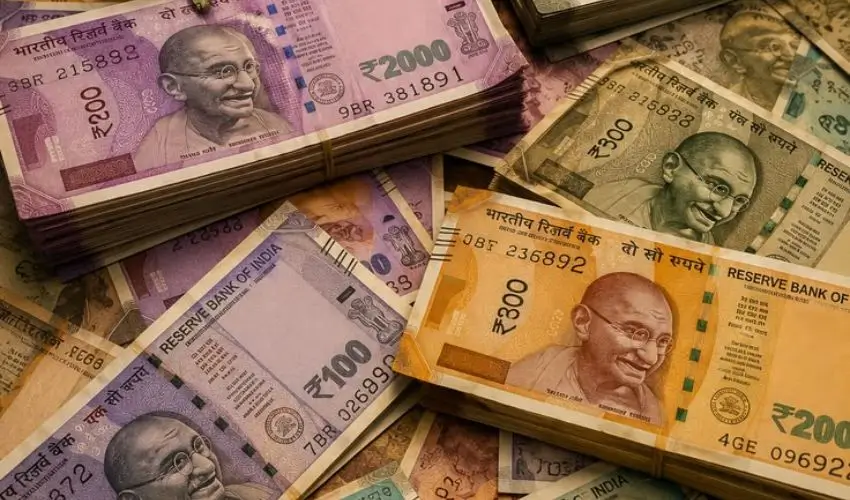
Indian banknotes are commonly available in denominations such as ₹10, ₹20, ₹50, ₹100, ₹200, ₹500, and ₹2000 (where available). Smaller denominations are particularly useful for tips, local purchases, small shops, and incidental expenses. Many international travelers make the mistake of carrying only large notes and later discover that smaller vendors may struggle to provide change.
One of the most important financial habits for visitors is maintaining a reasonable balance between cash and electronic payment methods. Luxury travelers rarely need to carry large amounts of cash because hotels, premium restaurants, shopping centers, and established tourism businesses generally accept international cards. However, having smaller amounts of local currency remains practical for everyday situations.
Currency values naturally fluctuate over time. Rather than memorizing exchange rates before arrival, travelers should use current banking or exchange services during their trip. Most modern banking applications also provide real-time conversion information, making it easy to understand spending in familiar currency terms.
Understanding the Indian Rupee before arrival removes much of the uncertainty associated with travel spending and helps visitors make informed financial decisions throughout their journey.
One of the most common questions foreign travelers ask is whether they should rely primarily on cash or credit cards while visiting India. The most practical answer is that both remain useful, and the ideal approach combines them strategically.
In luxury travel environments, credit cards are generally the preferred option. Five-star hotels, palace properties, luxury resorts, upscale restaurants, major retail stores, and established tourism operators almost always accept international Visa and Mastercard cards. American Express is accepted at many premium establishments, although acceptance can be slightly less widespread than Visa or Mastercard.
Using cards for larger expenses offers several advantages. It reduces the need to carry significant amounts of cash, creates an electronic transaction record, and often provides favorable exchange rates through international banking networks. Many luxury travelers pay for accommodation, transportation, fine dining, and shopping primarily through credit cards.
Cash remains valuable for smaller transactions. Local markets, independent artisans, village shops, smaller cafes, tips, and incidental purchases often function more smoothly when cash is available. In some rural areas, cash may still be the preferred payment method despite the rapid growth of digital systems.
The most effective strategy is flexibility. Carrying one or two internationally accepted cards while maintaining a moderate amount of local currency allows travelers to handle almost any situation comfortably. This balanced approach minimizes inconvenience and reduces dependence on any single payment method.
Travelers should also notify their banks before departure. Unexpected international transactions sometimes trigger fraud alerts that can temporarily block card usage. A simple notification prior to travel helps prevent unnecessary complications.
For most luxury visitors, a combination of cards for major expenses and cash for smaller purchases provides the smoothest and safest financial experience.
One of the advantages of modern travel is that accessing local currency in India has become significantly easier than in the past. International visitors now have several reliable options for obtaining rupees, each with its own advantages.
Many travelers exchange a small amount of currency immediately after arriving at the airport. While airport exchange counters provide convenience, they may not always offer the most favorable rates. As a result, experienced travelers often exchange only enough money for immediate needs before using other methods during the trip.
ATMs remain one of the most practical ways to obtain local currency. Major cities, airports, shopping districts, and tourist destinations generally provide extensive ATM networks. International debit and credit cards linked to major banking systems are typically accepted at most reputable machines.
Using ATMs often provides competitive exchange rates because transactions are processed through banking networks rather than retail exchange services. However, travelers should remain aware of potential withdrawal fees imposed by both local and home-country banks.
Authorized currency exchange offices also operate throughout major tourist destinations. Reputable hotels frequently assist guests in locating trustworthy exchange providers if needed. Travelers should avoid exchanging money through unofficial channels, regardless of how attractive the offered rate may appear.
A useful rule is to avoid carrying excessive cash. India is generally safe for tourists, particularly in luxury travel environments, but carrying only the amount needed for several days reduces risk and provides peace of mind.
The combination of ATMs, cards, and occasional currency exchange services ensures that most visitors can access funds easily throughout their journey.
Tipping is one area where many international visitors feel uncertain. While India does not always follow the same tipping practices found in North America, gratuities are appreciated in many service-related situations, particularly within the tourism and hospitality industries.
Luxury hotels often include service charges within bills, but guests frequently provide additional tips for exceptional service. Housekeeping staff, porters, concierge personnel, and restaurant teams commonly receive gratuities when service exceeds expectations.
Private drivers play an especially important role in many luxury India journeys. Unlike simple transportation providers, experienced chauffeurs often assist with logistics, local recommendations, restaurant suggestions, luggage handling, and day-to-day travel support. As a result, tipping private drivers is common among international travelers.
Tour guides, naturalists, safari trackers, and specialist experts are also frequently tipped when their knowledge and service enhance the overall experience. The exact amount varies depending on trip length, service quality, and personal preference.
What matters most is not the precise amount but the spirit in which the tip is given. Thoughtful recognition of excellent service is generally appreciated and contributes positively to interactions throughout the journey.
Luxury travelers should view tipping as a way to acknowledge professionalism and hospitality rather than as an obligation. Most experienced tourism professionals understand international differences and do not expect rigid adherence to any specific standard.
India is generally a safe destination for international travelers, particularly those following well-planned itineraries and staying within reputable tourism networks. Nevertheless, a few sensible financial precautions can help avoid unnecessary problems.
One common mistake is carrying all money in a single location. Travelers should distribute cash, cards, and important documents between secure locations such as hotel safes, wallets, and luggage compartments. This approach reduces risk if an item is misplaced.
Another frequent error involves exchanging currency through unofficial sources. Visitors should use banks, licensed exchange providers, reputable hotels, or ATMs rather than accepting offers from individuals promising unusually favorable rates.
When using ATMs, selecting machines located within banks, shopping centers, airports, or well-trafficked areas generally enhances security. Travelers should also review transaction records periodically to ensure accuracy.
Luxury travelers occasionally assume they need large amounts of cash for every situation. In reality, modern payment systems now cover most major expenses. Carrying excessive cash creates unnecessary risk without providing meaningful benefits.
Finally, visitors should remain cautious of unsolicited financial assistance from strangers. Most interactions in India are genuine and welcoming, but basic travel awareness remains valuable. Polite caution, combined with common sense, generally prevents the vast majority of problems.
For travelers using private guides, reputable hotels, and established tourism services, financial safety concerns are usually minimal. A combination of preparation, awareness, and flexibility allows visitors to focus on enjoying their experience rather than worrying about money.
Enquire now and connect with a dedicated Travel Expert who will respond within 24 hours to begin crafting your private journey.

Dev
Travel Expert
12+ yrs experience

Have a look at our original experiences and then contact us with your questions, or call +91-9351360903

Our Experts will send you a detailed holiday itinerary specified to your desires. It's our service promise to you.

Tailor-made doesn't mean expensive! Ask about our price promise and book with financial security.
Yes, but only a moderate amount. Cards cover most major expenses, while cash is useful for smaller purchases and tips.
Yes. Visa and Mastercard are widely accepted at hotels, restaurants, and larger businesses.
A small amount may be useful, but ATMs and exchange services within India are generally convenient.
Yes. ATMs are widely available in cities, airports, and major tourist destinations.
The amount depends on your travel style, but most luxury travelers only require a modest amount for incidental expenses.
Tipping is appreciated in tourism, hospitality, and service industries, particularly for excellent service.
Yes, although rates may not always be the most competitive.
No. Modern payment systems are widely used, especially in urban and luxury travel environments.
Use a combination of cards, moderate cash, secure storage, and sensible distribution of funds.
Yes. This helps prevent international transactions from being flagged as suspicious.
Yes. Experienced drivers often know reputable exchange providers and ATM locations.
Relying entirely on a single payment method instead of maintaining flexibility through both cards and cash.