Royal Palace Stays in India
17 Sep 2025
India does not reveal itself in a single visit. It unfolds - through layers of history, architecture, culture, cuisine, and landscape that shift dramatically from one region to the next. For first-time international visitors, the question is rarely whether India is worth visiting. The question is always: where do you begin?
The country spans over three million square kilometres, contains more than thirty UNESCO World Heritage Sites, and holds within its borders every kind of travel experience imaginable - from Himalayan mountain passes to tropical coastlines, from desert dunes to ancient temple cities. Choosing where to go on a first visit to India requires both clarity and restraint.
This guide is written specifically for international travelers seeking a refined, private, and deeply immersive introduction to India. These are not simply the most famous destinations - they are the places that create the kind of experiences that stay with you long after you return home.
India is one of the few countries where the difference between a poorly planned journey and a thoughtfully curated one is almost impossible to overstate. The country's scale, diversity, and complexity mean that logistics, timing, and the quality of your guides make an enormous difference to how each destination is experienced.
Luxury travel in India is not simply about five-star hotels - though the country has some of the finest heritage properties in the world. It is about private access, unhurried pacing, expert cultural interpretation, and the kind of moments that cannot be replicated on a group itinerary. With that in mind, the destinations below have been selected not just for their fame, but for the depth of experience they offer to first-time visitors traveling privately.
One Country. Endless Wonders.
Begin your Indian adventure with iconic cities, breathtaking landscapes, and authentic cultural experiences that create memories for a lifetime.
Jaipur is the natural starting point for most first-time visitors to India and for very good reason. The capital of Rajasthan is a city built on royal ambition, founded in 1727 by Maharaja Sawai Jai Singh II, and its architecture tells that story in pink sandstone across every major avenue and monument.
The Amber Fort, rising dramatically on a hillside above the old city, is one of the most photographed structures in India - yet it rewards slow, private exploration far more than it does a hurried group tour. The City Palace complex, still partially occupied by the royal family of Jaipur, offers guided access to collections of royal paintings, ceremonial weapons, and artifacts that illuminate centuries of Rajput history. Hawa Mahal, the five-storey latticed facade designed so royal women could observe street life without being seen, is one of India's most iconic facades.
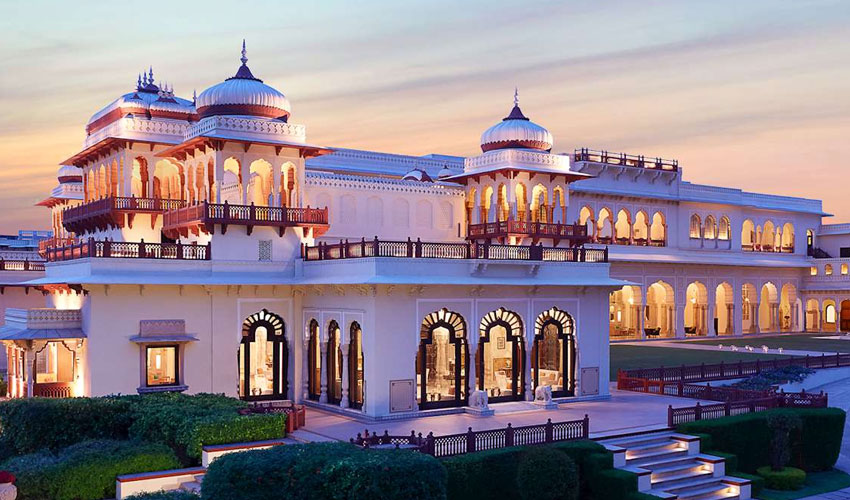
Beyond the monuments, Jaipur rewards those who take the time to walk the lanes of the old walled city - through jewelry bazaars, block-printing workshops, and chai stalls where the rhythms of daily life have changed very little over generations. Stay at a heritage palace hotel - properties like Rambagh Palace or Samode Haveli place guests directly inside the city's royal legacy.
Best time to visit: October to March
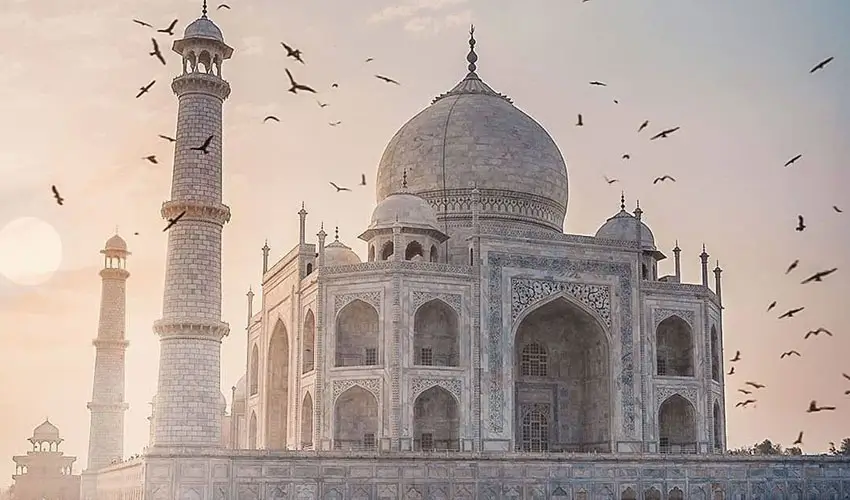
No first visit to India is complete without standing before the Taj Mahal. The description of it as the world's greatest monument to love has become familiar enough to seem like a cliché - until you are actually there, watching the marble shift from rose to white to gold as the morning light changes, and the cliché dissolves entirely into something much more personal.
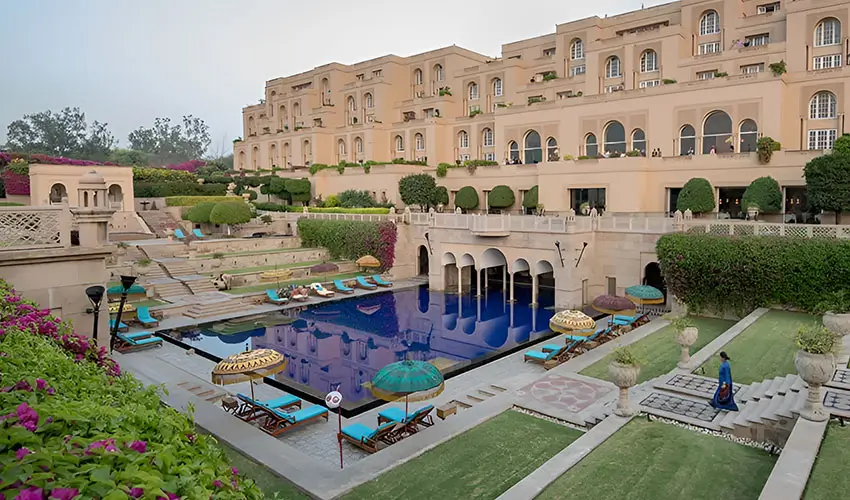
The Taj Mahal is best experienced at sunrise, privately, before the crowds arrive. A luxury private tour ensures you enter ahead of the general gates opening, with a guide who can give the building's history - the grief of Shah Jahan, the twenty-two years of construction, the thousand craftsmen - the attention it deserves. The Oberoi Amarvilas, located just 600 metres from the monument, offers uninterrupted Taj Mahal views from every room, allowing guests to watch the building at different times of day without ever leaving the property.
Agra is more than the Taj. The Agra Fort, a vast Mughal citadel, and Itmad-ud-Daulah - often called the Baby Taj - are both essential visits. Fatehpur Sikri, the abandoned Mughal capital located forty kilometres away, is a day trip of extraordinary atmospheric power.
Best time to visit: October to March
Delhi is not one city - it is several layered on top of each other, and that layering is part of what makes it such a compelling destination. Old Delhi, the Mughal city built by Shah Jahan in the seventeenth century, is a dense world of narrow lanes, ancient mosques, and spice markets that have operated without interruption for hundreds of years. New Delhi, designed by Edwin Lutyens under British colonial rule, is a city of wide boulevards, formal gardens, and imposing government buildings. And contemporary Delhi - Hauz Khas, Mehrauli, Lodhi Colony - is a vibrant urban culture of art, design, and some of the finest restaurants in South Asia.
A private guided tour of Old Delhi by rickshaw through Chandni Chowk, followed by Humayun's Tomb and the Qutb Minar complex, provides a half-day journey through more than a thousand years of history. In the evening, India Accent - widely considered the most exciting restaurant in India - offers a meal that reframes every assumption about Indian cuisine.
Best time to visit: October to March
If Jaipur represents royal power and Agra represents Mughal grandeur, Udaipur represents something quieter and more romantic: a city of lakes, white marble palaces, and a pace of life that invites staying longer than planned.
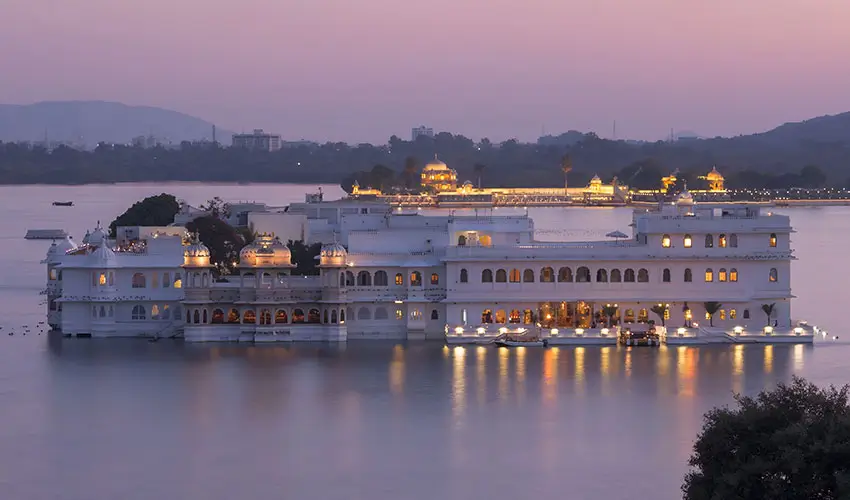
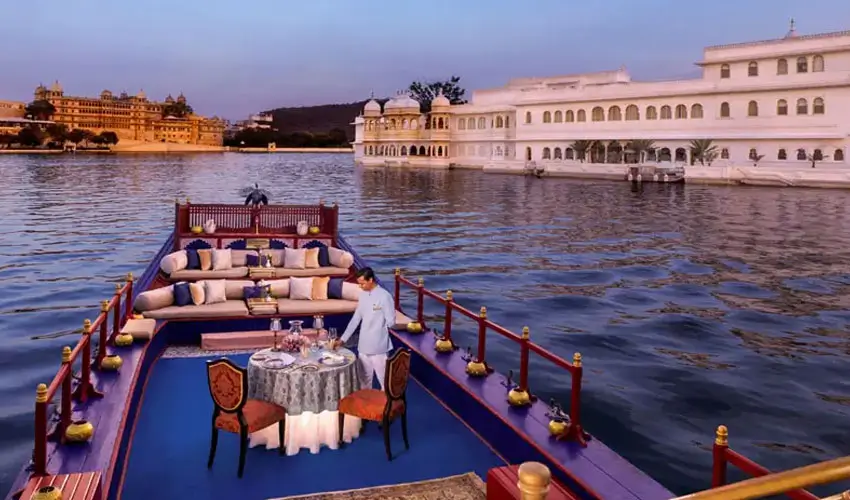
The City Palace complex, rising above Lake Pichola, is the largest royal residence in Rajasthan and contains a series of museums, courtyards, and private apartments that tell the story of the Mewar dynasty across five centuries. A boat ride on Lake Pichola at sunset, with the Lake Palace hotel glowing white in the middle of the water and the Aravalli hills turning amber behind it, is one of the most visually spectacular experiences available anywhere in India. The Oberoi Udaivilas, built along the lake's edge, offers an infinity pool and terrace dining with views that are genuinely difficult to leave.
Udaipur also rewards the traveler who ventures beyond the palace walls - into the old city lanes, to the Jagdish Temple, through the Saheliyon ki Bari gardens, and out to the village of Shilpgram for an encounter with Rajasthani folk music and craft traditions.
Best time to visit: September to March
Varanasi is unlike any other city in the world. One of the oldest continuously inhabited urban settlements on earth, it sits on the banks of the Ganges and has been a centre of Hindu pilgrimage, philosophy, and learning for more than three thousand years. It is intense, sacred, and utterly unlike anything in the Western travel experience.
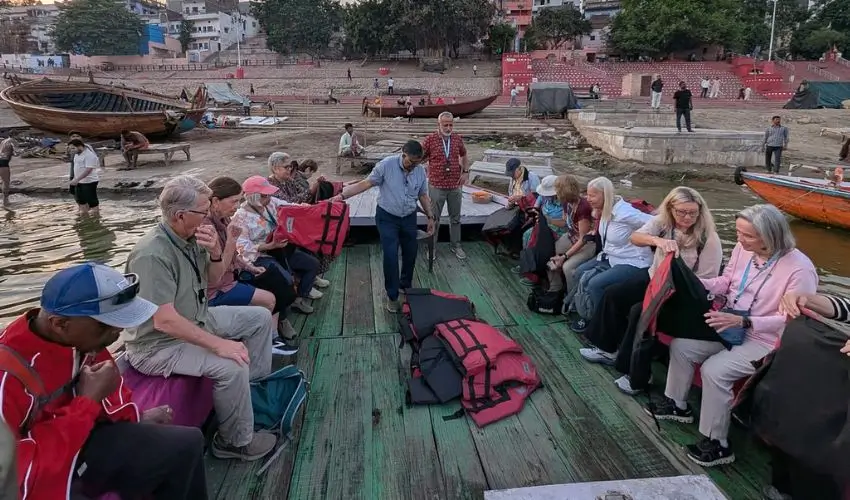
A private dawn boat journey along the Ghats - the long stepped riverbanks where priests perform rituals, pilgrims bathe, and funeral pyres burn - is one of those rare travel experiences that genuinely shifts perspective. The evening Ganga Aarti ceremony, held daily at Dashashwamedh Ghat, is a choreographed ritual of fire, chanting, and devotion that draws thousands of visitors and yet feels, in its essence, entirely timeless.
Luxury travel in Varanasi is possible and deeply rewarding. Properties like Brijrama Palace, a heritage haveli on the Ghats, offer private terraces overlooking the river and curated cultural encounters - with classical musicians, weavers, and Sanskrit scholars - that are unavailable to visitors staying at conventional hotels.
Best time to visit: October to March
See India’s Greatest Highlights
Uncover world-famous landmarks, hidden gems, and immersive experiences that make India one of the most rewarding destinations for first-time visitors.
Kerala is southern India at its most beautiful and most serene. The state's defining landscape - the network of coastal lagoons, lakes, and canals known as the backwaters - is unlike anything in the north, and the contrast between a Rajasthan palace and a private Kerala houseboat makes for one of the most satisfying combinations available in India travel.
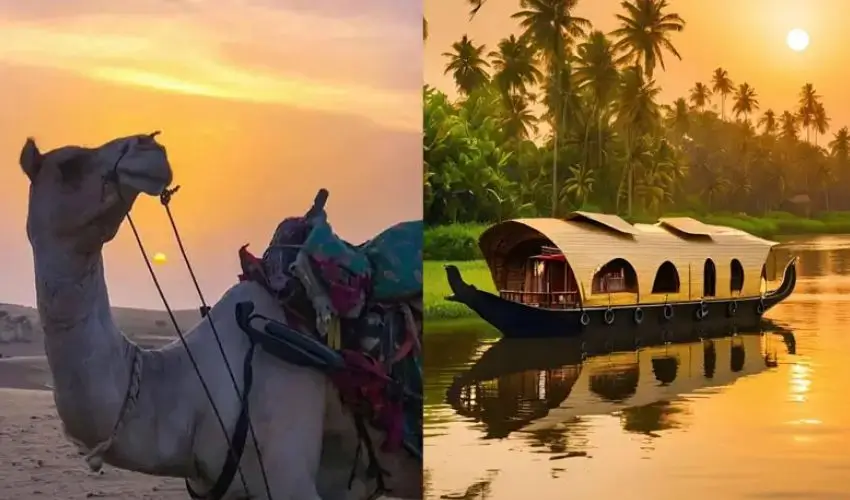
A private kettuvallam - a converted rice barge, now fitted with bedrooms, a kitchen, and an open sun deck - allows guests to drift slowly through the backwaters between Alleppey and Kumarakom, passing through villages, rice paddies, and coconut groves at a pace that feels entirely disconnected from modern travel. Munnar, in the hills above the plains, offers tea estate stays with mist-covered landscapes of extraordinary stillness. And the traditional Ayurvedic wellness programmes available at specialist retreats throughout Kerala - not spa treatments but genuine medicinal traditions - attract international visitors seeking restoration alongside culture.
Best time to visit: September to March (avoiding the monsoon peak)
Jodhpur is Rajasthan's second city and, for many visitors, its most visually dramatic. The old city's blue-washed houses cluster at the base of Mehrangarh Fort - one of the largest and best-preserved fort complexes in India - and the combination of cobalt walls and ochre sandstone rising against a desert sky creates a visual impression that no photograph quite captures.
Mehrangarh itself is a museum of Rajput military history, artistic achievement, and domestic life. Its collection of royal palanquins, elephant howdahs, miniature paintings, and ceremonial weapons is among the finest in the country. Taj Umaid Bhawan Palace - part hotel, part royal residence, part museum - offers one of the most dramatic luxury stays in India: a vast Art Deco palace that TripAdvisor has ranked among the best hotels in the world.
Best time to visit: October to March
Jaisalmer sits at the edge of India and the edge of imagination. The golden sandstone fort that gives the city its name rises from the flat desert like a mirage, and within its walls an entire living city of temples, havelis, and homes has been occupied without interruption since the twelfth century.
The desert experience available beyond Jaisalmer - camel safaris into the Sam sand dunes, an overnight stay at a luxury desert camp under an extraordinarily clear sky, a dawn in the dunes with nothing but silence and sand in every direction - is one of the defining India travel experiences for international visitors. Luxury desert camps have elevated this experience considerably in recent years, offering private tented suites, gourmet Rajasthani dinners, and folk music performances that feel genuine rather than staged.
Best time to visit: November to February
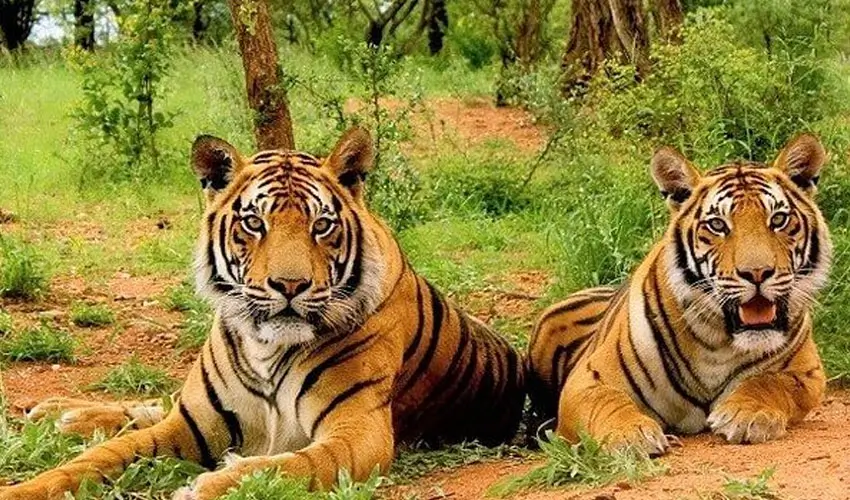
Ranthambore National Park in eastern Rajasthan is the most accessible and, many experts argue, the most rewarding of India's tiger reserves for first-time wildlife visitors. The park's relatively open terrain and high tiger density make sightings significantly more reliable than at many other reserves, and the ruins of a medieval fort within the park - with tigers sometimes sighted on the ramparts - create an atmosphere unlike any other wildlife destination on earth.
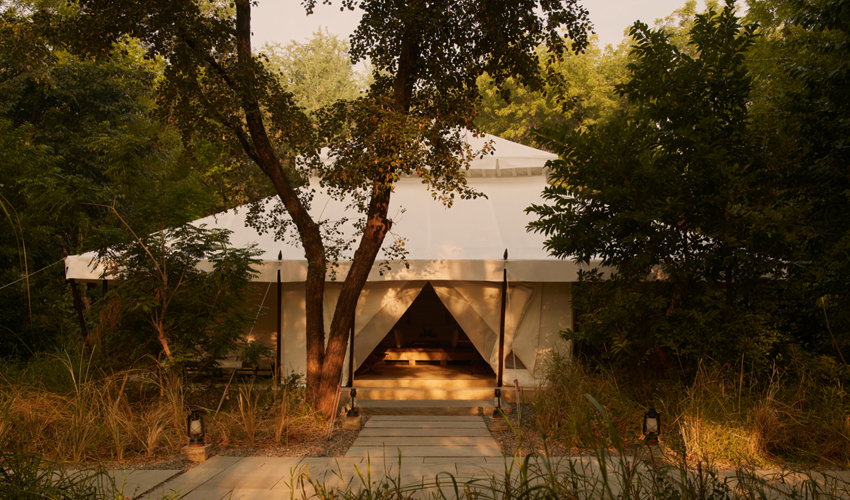
A luxury safari at Ranthambore means staying at properties like the Oberoi Vanyavilas, whose tented suites combine heritage aesthetics with complete comfort, and conducting all game drives in dedicated private jeeps with expert naturalists who understand both the ecology and the individual animals of the park.
Best time to visit: October to June (park closes July–September)
Mumbai is not a destination that sits comfortably within heritage itineraries, but as a starting or finishing point for a luxury India journey it is unmatched. The city holds some of India's finest restaurants, most sophisticated art galleries, and most architecturally ambitious spaces - from the Gothic Revival grandeur of Chhatrapati Shivaji Maharaj Terminus to the Art Deco boulevards of Marine Drive to the contemporary arts scene of Bandra.
The Taj Mahal Palace Hotel, overlooking the Gateway of India at Apollo Bunder, is one of the great hotels of the world - a building whose history, service, and positioning combine to create an arrival or departure experience that sets the appropriate tone for a luxury India journey. An evening dinner with a table facing the harbour, followed by a nightcap in the hotel's Sea Lounge, is as elegant a way to begin or end an India journey as exists in the country.
Best time to visit: November to February
Your First Trip to India Starts Here
Discover iconic landmarks, vibrant cities, royal palaces, and unforgettable cultural experiences with a carefully curated journey through India’s most remarkable destinations.
The destinations above do not need to be visited all at once, and most should not be. A well-designed first India itinerary prioritises depth over coverage - spending enough time in each place to move beyond the obvious and into the genuinely memorable.
For most international visitors, a fourteen-day journey allows a considered introduction to three to four of these destinations. The classic combination - Delhi, Agra, and Jaipur, with an extension to Ranthambore or Udaipur - remains the single most satisfying starting point. Adding Kerala as a southern counterpoint creates a journey that encompasses India's royal north and tropical south in a single itinerary.
Every well-crafted India itinerary begins with the same element: a private design process that matches the destinations, pace, and accommodations to the specific interests and travel style of the guests. India is too layered and too diverse to approach through a fixed template.
Enquire now and connect with a dedicated Travel Expert who will respond within 24 hours to begin crafting your private journey.
Dev
Travel Expert
12+ yrs experience

Have a look at our original experiences and then contact us with your questions, or call +91-9351360903

Our Experts will send you a detailed holiday itinerary specified to your desires. It's our service promise to you.

Tailor-made doesn't mean expensive! Ask about our price promise and book with financial security.
Yes. India is a well-established and safe destination for international visitors, particularly those traveling on private, fully supported itineraries. Luxury travelers with dedicated drivers, expert guides, and curated accommodations experience the country with a level of logistical support that removes almost all of the difficulties associated with independent travel. The country receives millions of international visitors each year, including from the United States, United Kingdom, Australia, and Europe.
these months, the weather across the north - Delhi, Agra, Rajasthan, and Varanasi - is pleasantly warm during the day and cool at night. South India and Kerala are comfortable from September through March. April and May are very hot across the north, and the monsoon se The best time to visit India for most international travelers is between October and March. Duringason from June to September brings heavy rain to most regions, though some travelers find the lush landscape and fewer crowds appealing.
A minimum of ten to fourteen days is recommended for a meaningful first visit to India. This allows enough time to visit three to four major destinations without feeling rushed. Many experienced India travelers suggest that two weeks is the sweet spot - enough to see the highlights and begin to understand the country's depth, without the exhaustion that comes from packing too many destinations into a short window.
Most international visitors require a visa to enter India. Citizens of over 150 countries are eligible to apply for an e-Visa online through the official Indian government portal, and approval is typically granted within 72 hours of application. The tourist e-Visa is available for 30-day and 90-day durations depending on nationality. It is strongly recommended to apply at least one week before travel to allow time for processing.
Luxury travel in India spans several accommodation categories: international five-star hotels such as the Oberoi and Taj groups, heritage palace hotels converted from royal residences, boutique luxury properties within haveli buildings, and tented luxury safari camps. Each category offers a different but equally refined experience. Heritage palace hotels - particularly in Rajasthan - are among the most distinctive accommodations in the world, combining genuine royal history with contemporary comfort.
Food safety is managed carefully on curated luxury itineraries. All meals are served at carefully selected restaurants, heritage dining rooms, or within the hotels themselves. Guests on private tours are advised to drink bottled or filtered water and to consume fresh produce that has been prepared in professional kitchens. Indian cuisine is extraordinarily varied and, at the luxury level, absolutely world-class. Most high-end properties also offer international menus alongside Indian options.
The Golden Triangle is the most popular travel circuit in India, connecting Delhi, Agra, and Jaipur. It is called a triangle because the three cities form a rough triangular shape on a map. For first-time visitors, the Golden Triangle provides an excellent and coherent introduction to India's Mughal and Rajput heritage. Most travelers complete the circuit in five to seven days and frequently extend it with additional destinations such as Ranthambore, Udaipur, or Varanasi.
India can be visited independently, but first-time international visitors consistently report that the quality of their experience is dramatically better with a private, expert-led itinerary. A specialist luxury tour operator handles visa guidance, airport transfers, hotel selection, guide bookings, internal transportation, and all logistical coordination. This leaves travelers free to focus entirely on experiencing the country rather than managing the considerable complexity of travel in it.
India is a large country and distances should not be underestimated. Delhi to Agra is approximately 200 kilometres - around three to four hours by road or two hours by express train. Agra to Jaipur is approximately 240 kilometres - about four to five hours by road. Jaisalmer, at the western edge of Rajasthan, is approximately 575 kilometres from Jaipur - best reached by overnight train or a short flight. Kerala, in the south, requires a flight from any of the northern cities.
Light, breathable clothing is recommended for most of the year. Modest dress - covering shoulders and knees - is required at temples and religious sites, so a light scarf or shawl is essential. Comfortable walking shoes suitable for uneven surfaces are important at fort and palace sites. High-quality sunscreen, insect repellent, and a basic medical kit are advisable. Most luxury properties provide amenities, laundry services, and 24-hour guest support, so excessive packing is unnecessary.
Udaipur is widely considered the most romantic destination in India - the lake setting, the palace hotels, and the unhurried pace create a naturally intimate atmosphere. Jaisalmer, with its desert sunsets and private luxury camps, is equally powerful for couples seeking something more adventurous. Kerala's private houseboats and hill-station retreats offer a tropical alternative. Many honeymooners combine two of these destinations - for example, Udaipur and Kerala - for a journey that balances cultural richness with tropical relaxation.
The best starting point is a conversation with a specialist India travel designer who can match the right destinations, accommodations, and experiences to your specific interests, budget, and travel dates. A well-designed India itinerary is not assembled from standard packages - it is built around you. Key decisions include the duration of travel, the season, the balance between culture and nature, the desired pace, and whether the journey will focus on a specific region or provide a broader introduction to the country. With the right planning partner, a first trip to India becomes exactly the journey it should be - one that leaves you planning the second one before the first one has ended.