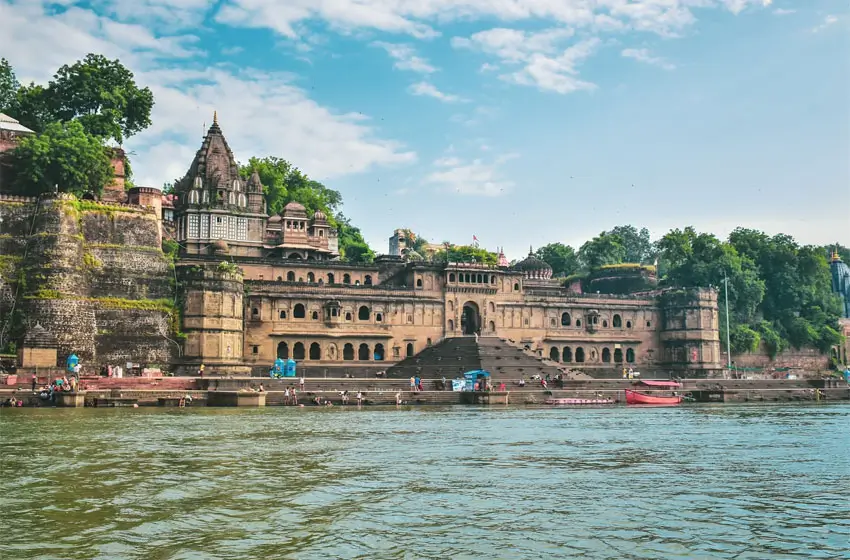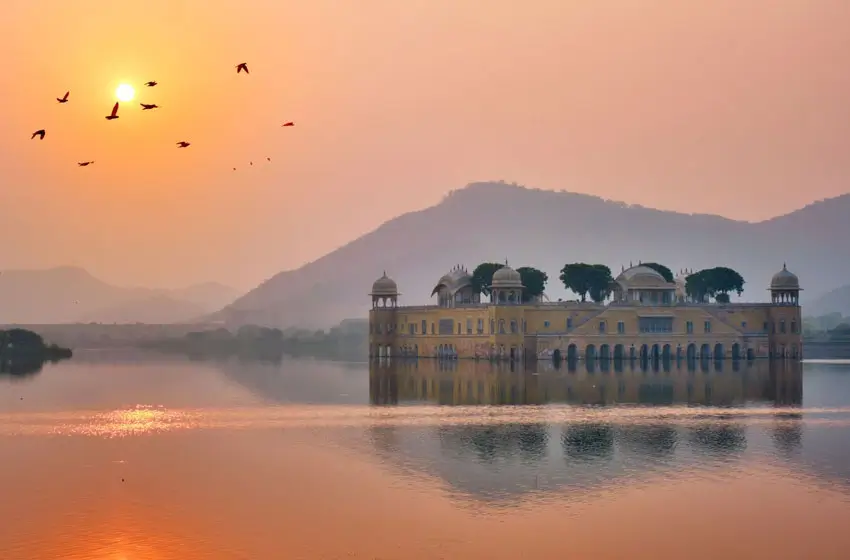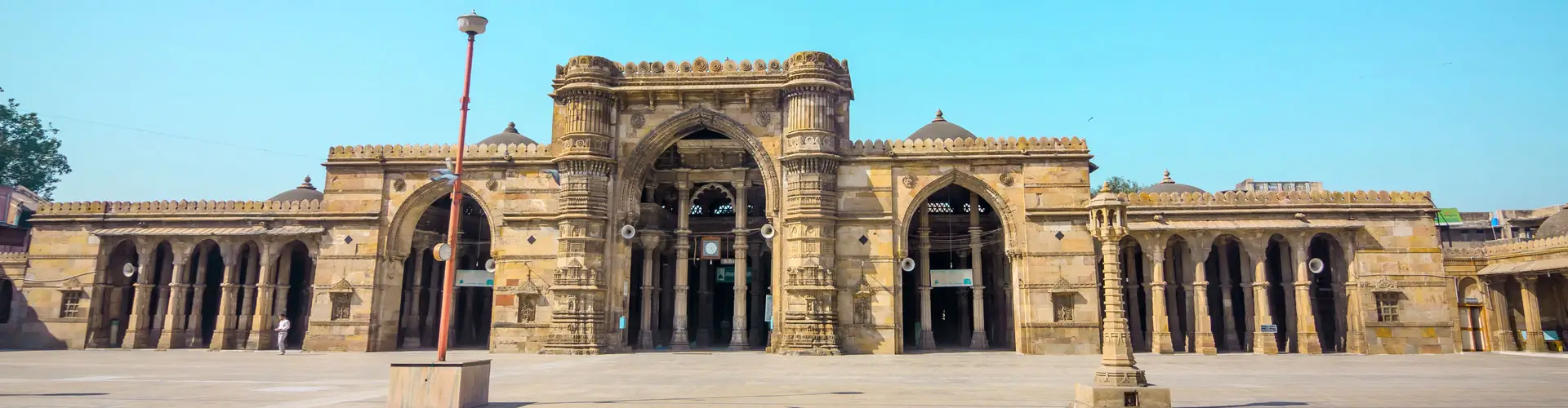
Western India presents a side of the country where urban life, sacred architecture, ancient trade routes, and living craft traditions coexist in a disciplined rhythm. Gujarat stands apart for its ability to preserve history not inside museums alone, but within functioning cities, villages, and landscapes shaped by centuries of movement and commerce.
This itinerary is designed for travellers who prefer context over crowds and depth over speed. From Ahmedabad, India’s first UNESCO World Heritage City, the journey moves through stepwells carved like underground temples, solar-aligned shrines, salt deserts shaped by monsoon cycles, and regions once connected to maritime trade thousands of years ago. Each location is approached with time for observation, local interaction, and architectural understanding.
Your journey begins with arrival at Sardar Vallabhbhai Patel International Airport, Ahmedabad, where a private chauffeur-driven vehicle and local representative will assist with a smooth welcome. The drive to your hotel offers a first glimpse into Gujarat’s organised urban character, wide roads, and cultural confidence shaped by centuries of trade and governance.
In the evening, a traditional Gujarati thali dinner is arranged at a well-regarded local venue. The meal introduces regional flavours built around seasonal vegetables, lentils, millet breads, and balanced spice combinations. This relaxed dining experience sets the tone for the days ahead, grounding the journey in local culinary traditions rather than tourist-focused presentations.
Breakfast, Lunch, Dinner
The day is dedicated to exploring Ahmedabad’s historic core, a living city rather than a preserved monument. Walking through the pols (traditional residential clusters), you encounter intricately carved wooden houses, bird feeders mounted on facades, and narrow lanes designed for climate control and community living. These neighbourhoods reflect a social system refined over generations.
Later, visits include the Sidi Saiyyed Mosque, celebrated for its stone lattice windows that demonstrate exceptional craftsmanship and visual balance. The day continues at Sabarmati Ashram, once home to Mahatma Gandhi, where India’s independence movement took shape through discipline and non-violence. The ashram’s simplicity provides an important contrast to the architectural richness seen earlier in the day.
Breakfast, Lunch, Dinner
A morning drive takes you to Patan, once a major administrative and cultural centre. The highlight is Rani Ki Vav, a UNESCO World Heritage Site designed as an inverted temple descending into the earth. As you walk downward through its tiers, over eight hundred sculptures reveal mythological narratives, celestial figures, and symbolic geometry carved with remarkable precision.
After the stepwell visit, the focus shifts to Gujarat’s textile legacy with a guided visit to a Patola silk weaving workshop. Here, you observe a painstaking double-ikat technique passed down through select families. The process illustrates the patience, skill, and cultural value attached to textiles in Gujarat, offering insight into why these fabrics were once traded across Asia and beyond.
Breakfast, Lunch, Dinner
The journey continues to Modhera, home to the 11th-century Sun Temple, built during the Solanki period. Designed to align with solar movements, the temple complex includes a grand stepped tank that once reflected ceremonial rhythms tied to astronomy and ritual. The absence of idol worship today allows visitors to focus entirely on spatial design, symmetry, and stone detailing.
By afternoon, you proceed toward the Little Rann of Kutch, a stark yet captivating landscape shaped by seasonal flooding and salt deposits. As daylight softens, the flat horizon and shifting colours create a striking natural setting. The evening is kept unhurried, allowing time to absorb the silence and scale of this unique ecological zone.
Breakfast, Lunch, Dinner
An early morning safari introduces the distinctive wildlife of the Little Rann of Kutch, most notably the Asiatic Wild Ass, found nowhere else in the world. Guided exploration reveals how animals adapt to saline terrain, extreme temperatures, and seasonal water cycles. Birdlife, desert foxes, and migratory species add to the ecological diversity of the region.
In the evening, a guided walk across the white salt flats offers a completely different sensory experience. As the surface reflects the sky, the landscape feels almost abstract, shaped by natural forces rather than human intervention. This moment of stillness and open space forms one of the most memorable contrasts of the journey, bridging nature and ancient geography.
Breakfast, Lunch, Dinner
After breakfast, the journey continues toward Vadodara, a city shaped by royal patronage and administrative planning. From here, you proceed to the Champaner–Pavagadh Archaeological Park, a UNESCO World Heritage Site that preserves an entire pre-Mughal Islamic city in remarkable condition. Unlike isolated monuments, this site reveals mosques, palaces, stepwells, and residential structures within a unified urban layout.
Walking through Champaner allows an understanding of how Indo-Islamic architecture evolved before Mughal dominance. The stone craftsmanship, water management systems, and town planning demonstrate a sophisticated approach to civic life. The surrounding hills of Pavagadh add a dramatic natural backdrop, reinforcing how geography and architecture were integrated rather than treated separately.
Breakfast, Lunch, Dinner
Today is dedicated to a full-day excursion to the Statue of Unity, dedicated to Sardar Vallabhbhai Patel, one of India’s key nation-builders. Standing as the world’s tallest statue, the structure is set within a carefully developed riverfront zone that combines engineering, symbolism, and landscape planning. The visit includes viewing galleries that provide insight into the construction process and Patel’s role in shaping modern India.
The experience continues at the Sardar Sarovar Dam, one of India’s most significant infrastructure projects. Here, you gain perspective on water management, irrigation planning, and regional development in western India. The surrounding viewpoints and controlled visitor areas allow time to absorb the scale of the project without rushing, keeping the day informative rather than overwhelming.
Breakfast, Lunch, Dinner
The route returns toward Ahmedabad with a focused excursion to Lothal, one of the most important sites of the Indus Valley Civilisation. Dating back over 4,500 years, Lothal offers rare insight into early maritime trade, urban drainage systems, and dockyard engineering. The site’s layout clearly shows how ancient planners managed tides, storage, and ship movement.
A walk through the ruins highlights the world’s earliest known dry dock, reinforcing Gujarat’s long-standing connection with international trade. The on-site museum complements the ruins by displaying seals, tools, and artefacts that place Lothal within a global historical context. This visit adds depth to the journey by linking ancient commerce with the modern ports that still define the region today.
Breakfast, Lunch, Dinner
Returning to Ahmedabad, the day is reserved for experiencing the city’s commercial and social pulse. Visits to local textile markets provide opportunities to understand handloom traditions, block printing techniques, and regional fabrics that differ significantly from northern Indian styles. These markets remain functional trading spaces rather than curated shopping zones.
In the evening, time is set aside at Manek Chowk, where the city transforms after sunset into a vibrant street food and trading area. The atmosphere reflects Ahmedabad’s ability to balance tradition and modern life within the same urban space. This final evening allows relaxed exploration and personal time before departure preparations.
Breakfast, Lunch, Dinner
The final day begins at a comfortable pace, allowing time for last-minute bazaar visits or quiet moments at the hotel. Depending on flight schedules, optional stops can be arranged for specialty shopping or revisiting preferred locations within the city.
A private transfer to Sardar Vallabhbhai Patel International Airport ensures a smooth departure. The journey concludes with a clear understanding of Gujarat’s layered identity—one shaped by ancient ports, religious architecture, textile mastery, and carefully preserved urban heritage.
Breakfast, Lunch, Dinner
Enquire now and connect with a dedicated Travel Expert who will respond within 24 hours to begin crafting your private journey.
Dev
Travel Expert
12+ yrs experience

Have a look at our original experiences and then contact us with your questions, or call +91-9351360903

Our Experts will send you a detailed holiday itinerary specified to your desires. It's our service promise to you.

Tailor-made doesn't mean expensive! Ask about our price promise and book with financial security.
Delhi - Agra - Abhaneri - Jaipur - Delhi
Delhi - Lucknow - Agra - Jaipur - Bagru - Tonk - Kota - Indore - Maheshwar - Mumbai