
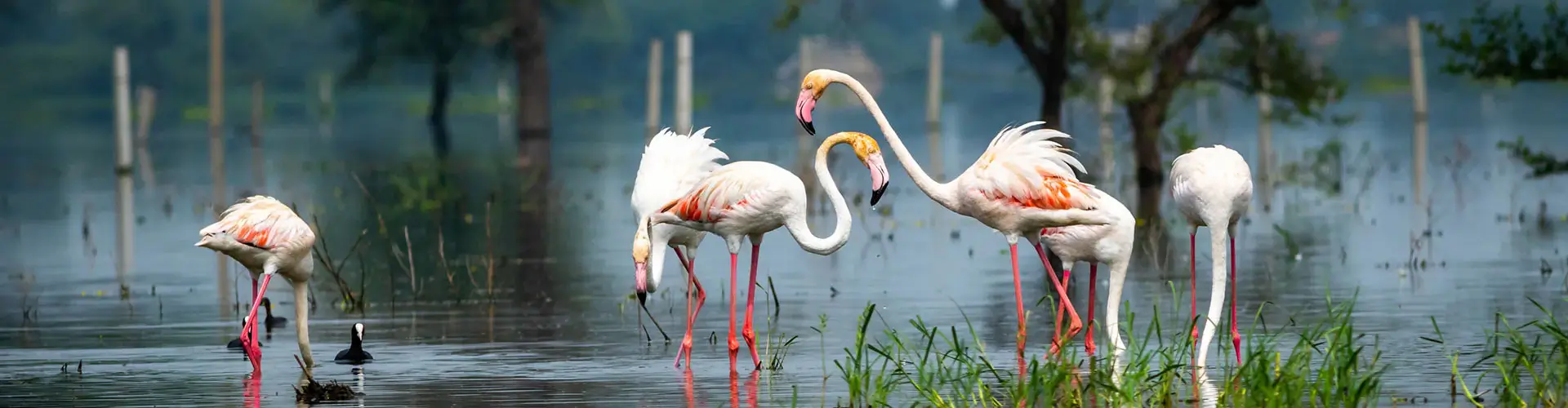
Wings & Whiskers is designed for wildlife travelers who understand that ecosystems do not exist in isolation. This journey traces the natural food chain - from migratory birds and wetland systems to aquatic predators and apex forest carnivores - across northern and central India’s most important habitats.
Beginning with bird-rich wetlands near Delhi, the route gradually deepens into UNESCO-protected marshes, riverine ecosystems dominated by gharials and dolphins, and finally the dense sal forests of Corbett’s Dhikala zone. The itinerary emphasizes progressive immersion, allowing repeated observation rather than rushed sightings.
Ideal for birders, photographers, conservation-focused travelers, and first-time safari enthusiasts who want scientific context, this journey balances physical ease with ecological depth. Each destination builds on the previous one, offering a complete understanding of how India’s wildlife systems interconnect.
Arrive at Indira Gandhi International Airport and transfer to your hotel in Delhi. This first day is kept intentionally light to allow recovery from international travel and adjustment to time zone and climate.
The evening is reserved for rest or a short briefing outlining the ecological focus of the journey ahead. Delhi serves only as a logistical gateway, ensuring you are fresh for early morning birding the following day.
Depart early in the morning for Sultanpur National Park, located approximately one hour from Delhi. This compact wetland reserve is ideal for understanding wetland bird behavior without long travel.
Spend the morning birding with a naturalist, observing resident and migratory species such as painted storks, pelicans, kingfishers, and raptors. The park’s manageable size allows close observation and patient identification.
Return to Delhi by afternoon. The rest of the day is kept relaxed, allowing time to review field notes and photographs. Overnight in Delhi.
After breakfast, drive approximately four hours to Bharatpur, home to the Keoladeo National Park. The landscape transitions from urban outskirts to agricultural plains and finally into wetland-fed forests.
In the late afternoon, enjoy a sunset rickshaw safari, a traditional and effective way to explore the wetlands quietly. The slow pace allows close encounters with herons, cranes, and waterfowl as golden light settles over the marshes.
Spend a full day exploring Keoladeo National Park on foot and by bicycle. This method encourages deep immersion, allowing observation of nesting colonies, feeding patterns, and seasonal water management systems.
Naturalists explain how water levels shape bird migration and breeding cycles. The absence of motor vehicles creates an intimate experience where sound, movement, and light guide discovery rather than speed.
Evening is free to rest and prepare for the river ecosystems ahead.
Drive approximately two hours to the Chambal River, one of India’s cleanest and least disturbed river systems. The change from wetland marsh to sandy riverbanks marks a major ecological shift.
In the afternoon, embark on a boat safari along the Chambal. Observe gharial crocodiles, mugger crocodiles, freshwater turtles, and river birds nesting on sandbanks. The experience emphasizes patience and distance-based observation.
Overnight near the river, surrounded by quiet and open sky.
Begin the day with a second morning boat safari, offering different light conditions and increased wildlife activity. Early hours are ideal for spotting basking gharials and river birds in motion.
Later, begin the journey toward Corbett National Park, via road and/or train depending on logistics. The long transition allows mental and physical preparation for dense forest environments ahead.
Arrive near Corbett by evening and settle in for the night.
After early morning formalities, enter the Dhikala core zone, the heart of Corbett National Park. Staying inside the park offers access to prime habitat unavailable to day visitors.
Afternoon safari explores forest tracks and grasslands near the Ramganga River. Naturalists focus on habitat reading, prey species, and early tiger indicators rather than rushed movement.
Overnight inside the forest, surrounded by uninterrupted wilderness.
Morning safari follows the Ramganga River corridor, a lifeline for wildlife. The area supports elephants, deer, otters, and predators drawn by consistent water access.
Tracking continues throughout the day, balancing patience with strategic positioning. Afternoon and evening offer additional exploration of forest edges and grasslands, increasing chances of tiger encounters.
Today emphasizes Corbett’s incredible avian diversity, with over 600 recorded bird species. Early morning hours are ideal for raptors, hornbills, and woodland birds.
Later, explore open grasslands where deer herds congregate, supporting predator movement. The day reinforces Corbett as a complete ecosystem rather than a single-species park.
Enjoy a final morning safari inside Dhikala, often the most reflective experience after days of familiarity with the forest.
After breakfast, exit the park and drive approximately six hours back to Delhi. The transition from forest silence to urban life unfolds gradually, allowing reflection on the journey’s ecological arc.
Overnight in Delhi.
The morning is free for rest or packing. Transfers are arranged in the afternoon to Indira Gandhi International Airport for international departure.
Wings & Whiskers concludes with a layered understanding of India’s wildlife—from birds and wetlands to rivers and apex predators—woven into a single, coherent journey.
Enquire now and connect with a dedicated Travel Expert who will respond within 24 hours to begin crafting your private journey.

Dev
Travel Expert
12+ yrs experience

Have a look at our original experiences and then contact us with your questions, or call +91-9351360903

Our Experts will send you a detailed holiday itinerary specified to your desires. It's our service promise to you.

Tailor-made doesn't mean expensive! Ask about our price promise and book with financial security.