Rivers have always shaped India’s civilizations, commerce, and spiritual imagination. This journey follows the timeless rhythm of the Ganges river system, allowing travelers to experience the country from its most natural corridor. Moving at a deliberate pace, the voyage replaces constant packing with quiet observation and immersion.
Designed for travelers who value slow luxury, this floating boutique experience combines heritage exploration, village encounters, and curated shore visits. The ship becomes both transport and sanctuary, offering comfort while revealing landscapes that remain inaccessible by road.
Arrive in Kolkata and transfer to the river port, where your luxury river vessel awaits. After embarkation, settle into your cabin and familiarize yourself with the ship’s refined spaces, designed for comfort and quiet observation. The atmosphere immediately establishes a slower rhythm, distinct from land-based travel.
As the ship gently departs, Kolkata’s skyline fades into riverside neighborhoods and industrial remnants. Evening onboard introduces the journey ahead through a welcome briefing and dinner, while city lights shimmer on the water, marking the transition from urban life to river-based exploration.
The morning brings arrival at Chandannagar, once a French trading post. Disembark for a guided walk along the riverfront promenade, where colonial facades, former administrative buildings, and shaded avenues reflect European town planning adapted to tropical conditions.
The visit reveals how French influence shaped education, governance, and architecture along the Hooghly River. Returning to the ship, the afternoon sail continues upstream, allowing time to relax on deck as the riverbanks alternate between towns, temples, and agricultural fields.
Today focuses on two historically significant settlements shaped by European presence. In Serampore, once under Danish control, explore heritage buildings that housed missionaries, educators, and traders. The restrained architecture contrasts with British colonial styles seen elsewhere.
Later, visit Bandel, home to one of India’s oldest Christian churches. The setting highlights how religious, commercial, and cultural exchange flowed along the river. By late afternoon, the ship resumes sailing, offering uninterrupted views of daily river activity as fishermen, farmers, and ferries pass by.
With no fixed disembarkation today, the focus shifts fully to river life. As the ship glides upstream, observe how settlements thin out and rural landscapes dominate. Mud houses, small ghats, and cultivated fields line the banks, revealing patterns shaped by seasonal floods.
The slow pace encourages attention to subtle details—children bathing at the river’s edge, women washing clothes, and boats transporting produce. Onboard talks provide historical context, explaining how the Hooghly served as Bengal’s primary artery for trade and cultural exchange.
Disembark at a riverside village known for handloom weaving traditions. Walking through narrow lanes, the sound of wooden looms replaces mechanical noise. Artisans work within their homes, producing textiles using techniques refined over generations.
Conversations with weavers reveal how river access supports dyeing, transport, and trade. The experience emphasizes continuity rather than performance, offering insight into rural economies sustained by skill and patience. Return to the ship by afternoon, resuming the gentle upstream journey.
The ship continues sailing through deep rural Bengal, stopping briefly at small river ghats where local life unfolds without formality. Visits focus on understanding agricultural cycles, river irrigation, and seasonal movement shaped by monsoon patterns.
Back onboard, time is reserved for rest, reading, or observation from the deck. The absence of rigid schedules allows travelers to absorb the rhythm of river life, reinforcing the essence of slow travel where movement itself becomes the experience.
As the vessel nears Murshidabad, the landscape subtly changes. Riverbanks widen, and remnants of former administrative importance appear in the form of larger buildings and structured settlements. The Bhagirathi River carries historical weight as the former seat of Bengal’s Nawabs.
The evening sail offers a quiet preview of the region ahead. Mango groves and riverside gardens scent the air, setting the stage for encounters with royal heritage. Dinner onboard concludes the first half of the journey with anticipation rather than closure.
The ship docks near Murshidabad, once the political and cultural heart of Bengal. Disembarking here feels like stepping into a different tempo, where river trade once financed courts, palaces, and international diplomacy. The town’s river-facing architecture reflects its former authority and ceremonial importance.
A guided introduction walk reveals mosques, administrative buildings, and riverside ghats that framed Nawabi life. The focus remains on understanding context rather than covering distance, allowing time to absorb how power, wealth, and aesthetics converged along the Bhagirathi River.
Today is dedicated to Murshidabad’s royal heritage. Visit Hazarduari Palace, an imposing Italianate structure designed with a thousand doors, both real and false. The architecture reflects confidence and theatricality, built to impress visitors and protect royal privacy.
Inside, curated collections of porcelain, manuscripts, ceremonial weapons, and textiles illustrate the Nawabs’ global connections. Returning to the ship by afternoon, the atmosphere shifts back to tranquility. As evening falls, enjoy a sunset cruise while warm breezes carry the scent of mango orchards along the riverbanks.
With Murshidabad behind, the ship resumes its upstream journey along the Bhagirathi. This stretch of the river feels introspective, framed by agricultural land, temple spires, and fading colonial outposts. The movement itself becomes the highlight, reinforcing the philosophy of travel without urgency.
Onboard activities focus on quiet enrichment, including informal discussions on river history and regional culture. Observation from the deck reveals patterns of life shaped by water, where transport, ritual, and livelihood remain inseparable from the river’s flow.
As the journey progresses northward, the river’s character begins to change. Channels widen, and traffic becomes more spiritual than commercial, marked by pilgrims, ritual boats, and riverside shrines. The landscape subtly signals entry into the sacred geography of the Ganges.
The day is intentionally unstructured, allowing travelers to rest, reflect, or simply watch the horizon shift. This gradual transition emphasizes continuity rather than contrast, highlighting how the river connects regions, beliefs, and generations without interruption.
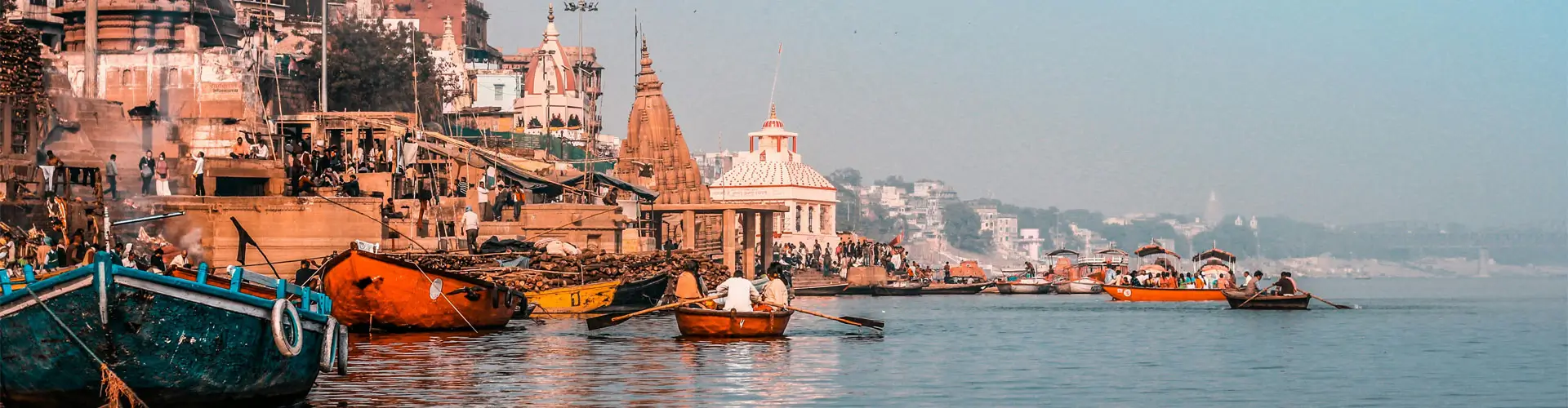
The approach to Varanasi is felt before it is seen. Activity along the river intensifies, with chanting, bathing rituals, and ceremonial fires appearing along the banks. The river carries an unmistakable spiritual density, shaped by centuries of devotion.
Onboard commentary provides context to the city’s role as one of the world’s oldest continuously inhabited spiritual centers. The vessel slows its pace, allowing time to observe how ritual integrates seamlessly into daily life, rather than standing apart as performance.
Disembark in Varanasi and step into a city where time operates differently. Narrow lanes, riverfront ghats, and temple courtyards form a layered landscape of belief and continuity. Guided exploration focuses on the city’s relationship with the Ganges rather than individual monuments.
In the evening, witness river rituals from a boat, observing the choreography of light, sound, and devotion along the ghats. The experience is contemplative, offering perspective rather than spectacle, and marking the spiritual culmination of the river journey.
Begin the final morning with quiet observation along the riverbanks, where daily rituals unfold at dawn. The simplicity of these moments contrasts with the scale of belief they represent, offering a gentle conclusion to the journey.
After breakfast, transfer arrangements are made for onward travel. The expedition concludes not as a destination reached, but as a river followed to its most meaningful expression, leaving travelers with a lasting sense of continuity, reflection, and calm.
Enquire now and connect with a dedicated Travel Expert who will respond within 24 hours to begin crafting your private journey.
Dev
Travel Expert
12+ yrs experience

Have a look at our original experiences and then contact us with your questions, or call +91-9351360903

Our Experts will send you a detailed holiday itinerary specified to your desires. It's our service promise to you.

Tailor-made doesn't mean expensive! Ask about our price promise and book with financial security.
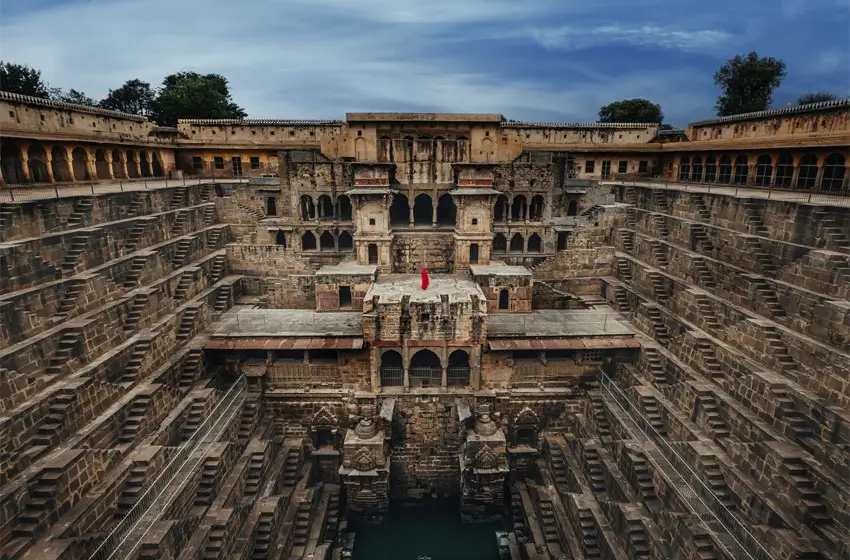
Delhi - Agra - Abhaneri - Jaipur - Delhi

Delhi - Agra - Ranthambore - Jaipur
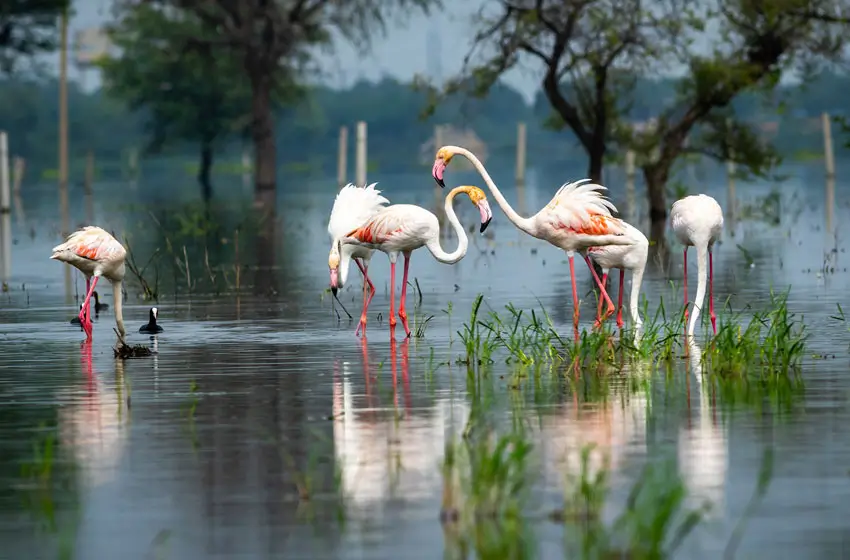
Delhi - Agra - Bharatpur - Ranthambore - Jaipur