India’s heritage is not defined by a single era or civilisation but by the continuous layering of cultures, beliefs, and architectural ambition over thousands of years. This itinerary is structured as a comprehensive cultural journey, connecting ancient spiritual centres, imperial capitals, artistic achievements, and royal landscapes into one cohesive experience. Each destination is approached with depth, allowing time to understand its historical role rather than merely observing its monuments.
The route moves seamlessly from the political and architectural foundations of Delhi to the spiritual intensity of Varanasi, where ritual life continues uninterrupted along the Ganges. From there, the journey explores the artistic sophistication of Khajuraho, the Mughal grandeur of Agra, and the scientific and royal achievements of Rajasthan. These regions together represent India’s most influential contributions to world heritage.
Designed as a true “once-in-a-lifetime” itinerary, this journey balances guided exploration with reflective moments, scenic travel, and cultural immersion. It is ideal for travellers who wish to see India’s finest sites in a logical and unhurried manner, while maintaining comfort, narrative continuity, and historical context throughout the journey.
Arrival in Delhi is met with personalised assistance at the international airport, followed by a private transfer to your hotel. Delhi’s vast scale and layered identity immediately reveal themselves through its blend of ancient ruins, colonial avenues, and modern infrastructure. As the capital of several powerful dynasties, the city has served as a political and cultural centre for over a thousand years.
The remainder of the day is kept relaxed to allow recovery from international travel. Depending on arrival time, a gentle orientation drive may be arranged, offering a first impression of the city’s historic quarters, government districts, and bustling streets without engaging in intensive sightseeing.
Breakfast, Lunch, Dinner
The day begins with an in-depth exploration of Delhi’s UNESCO-listed monuments, starting with Qutub Minar, a landmark of early Indo-Islamic architecture. The surrounding complex provides insight into how new architectural styles evolved by integrating local craftsmanship with imported design concepts.
Later visits include Humayun’s Tomb, a masterpiece that introduced Persian garden-tomb architecture to the Indian subcontinent and later inspired the Taj Mahal. The day concludes with a drive past colonial-era landmarks, highlighting Delhi’s transformation under British rule and its continued role as India’s administrative heart.
Breakfast, Lunch, Dinner
After breakfast, you transfer to the airport for a domestic flight to Varanasi, one of the world’s oldest continuously inhabited cities. Upon arrival, the atmosphere shifts noticeably as spiritual rituals, temple bells, and riverfront life define the city’s rhythm.
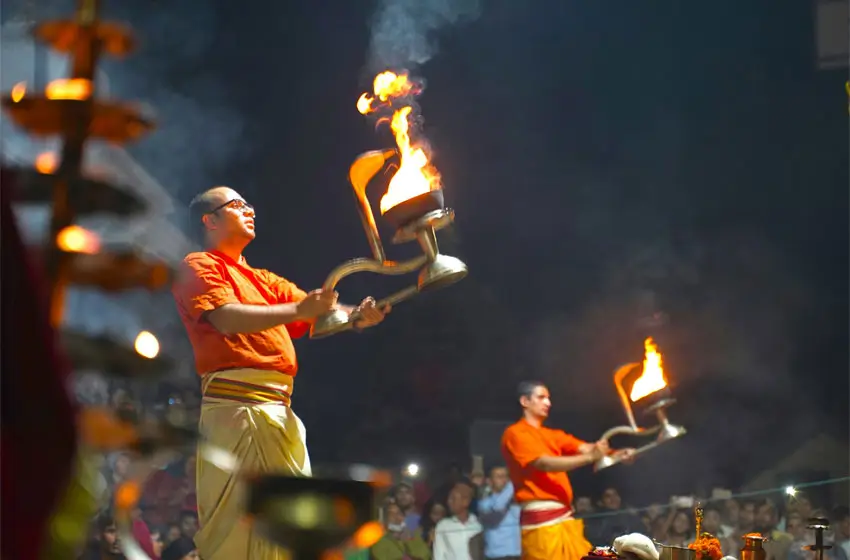
In the evening, a guided walk along the ghats introduces the sacred geography of the Ganges. Observing the Ganga Aarti ceremony provides insight into how faith, daily life, and ritual merge seamlessly in Varanasi, offering a powerful cultural contrast to the imperial landscapes of Delhi.
Breakfast, Lunch, Dinner
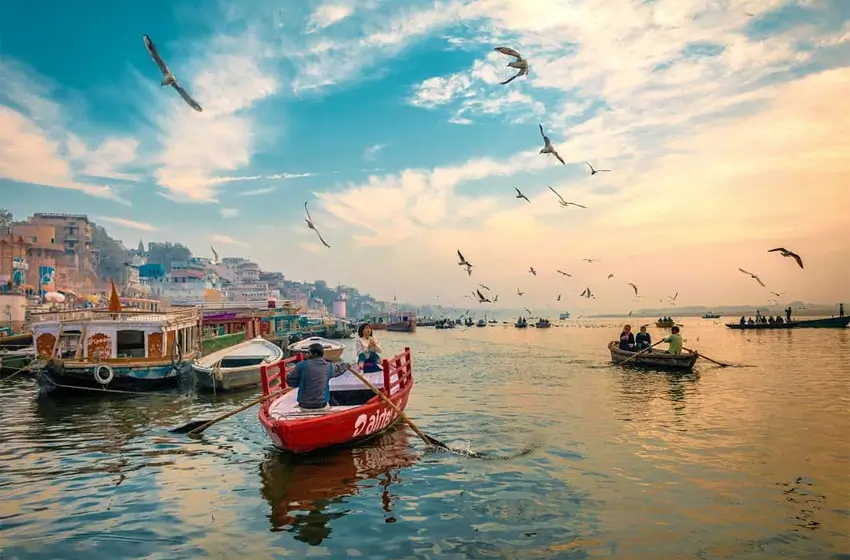
An early morning boat ride on the Ganges River allows observation of sunrise rituals performed along the ghats. Pilgrims bathing, priests chanting, and the soft movement of boats together create an experience rooted in centuries-old tradition and belief systems.
Later in the day, an excursion to Sarnath explores the site where Lord Buddha delivered his first sermon after attaining enlightenment. The archaeological remains, stupas, and museum collections provide essential context for understanding Buddhism’s spread from India to the rest of Asia.
Breakfast, Lunch, Dinner
Following breakfast, you transfer to the airport for a flight to Khajuraho, a small town renowned for its exceptional temple architecture. Upon arrival, the setting feels quieter and more contemplative, allowing focus on the artistry that defines the region.
The afternoon introduces the Khajuraho Group of Monuments, where temples are celebrated for their precise proportions and intricate stone carvings. Rather than symbolic excess, the sculptures reflect a balanced worldview where spirituality, daily life, and artistic expression coexist.
Breakfast, Lunch, Dinner
A full day is dedicated to exploring Khajuraho’s temple complexes in detail. The Eastern and Western Groups reveal a sophisticated understanding of geometry, iconography, and narrative storytelling carved entirely in stone.
Guided interpretation helps explain the social, religious, and philosophical meanings behind the sculptures. Time is allowed for observation and photography, ensuring the visit is immersive rather than hurried, and highlighting why Khajuraho remains one of India’s most significant artistic achievements.
Breakfast, Lunch, Dinner
After breakfast, you proceed by flight or road toward Agra, entering the heartland of the Mughal Empire. Upon arrival, check-in at the hotel is followed by a relaxed afternoon.
The city’s layout and riverfront setting prepare visitors for the architectural grandeur to come. This transition day serves as a bridge between India’s temple traditions and the imperial vision that defined Mughal rule in northern India.
Breakfast, Lunch, Dinner
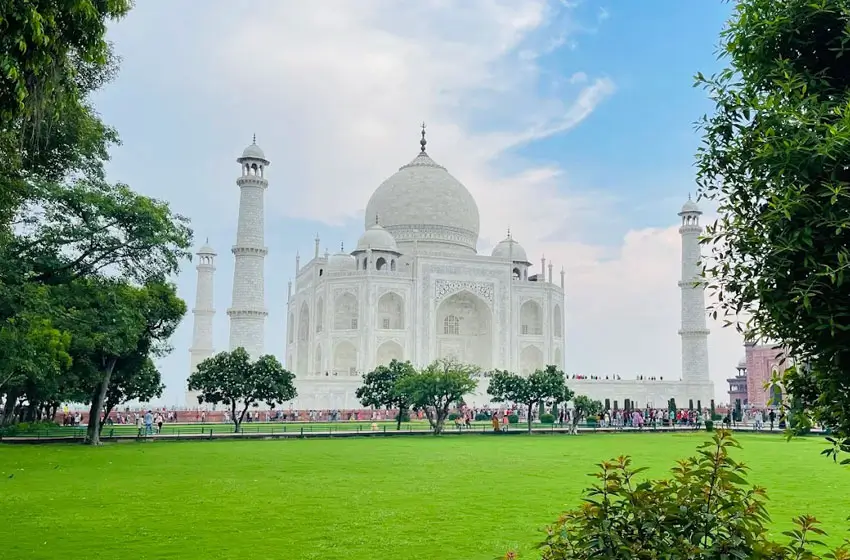
The day begins early with a guided visit to the Taj Mahal, one of the world’s most recognised monuments and a UNESCO World Heritage Site. Built as a symbol of devotion and imperial power, the monument’s symmetry, marble inlay work, and carefully planned gardens reflect the peak of Mughal architectural achievement. Time is allocated to understand the structure’s design philosophy rather than rushing through viewpoints.
Later, the exploration continues at Agra Fort, a vast red sandstone complex that functioned as the political and military centre of the Mughal Empire. Walking through its palaces, audience halls, and defensive walls provides insight into court life, administration, and the strategic control of the Yamuna River that sustained Mughal dominance.
Breakfast, Lunch, Dinner
After breakfast, you proceed to Fatehpur Sikri, the abandoned Mughal capital built by Emperor Akbar. Despite its short period of use, the city remains remarkably intact, showcasing a fusion of Persian, Central Asian, and Indian architectural elements. Palaces, mosques, and courtyards reveal Akbar’s vision of governance, tolerance, and cultural synthesis.
In the afternoon, the journey continues by road to Jaipur, Rajasthan’s capital city. As the landscape shifts from the plains of Uttar Pradesh to the semi-arid regions of Rajasthan, the transition highlights how geography influenced settlement patterns and royal power in western India.
Breakfast, Lunch, Dinner
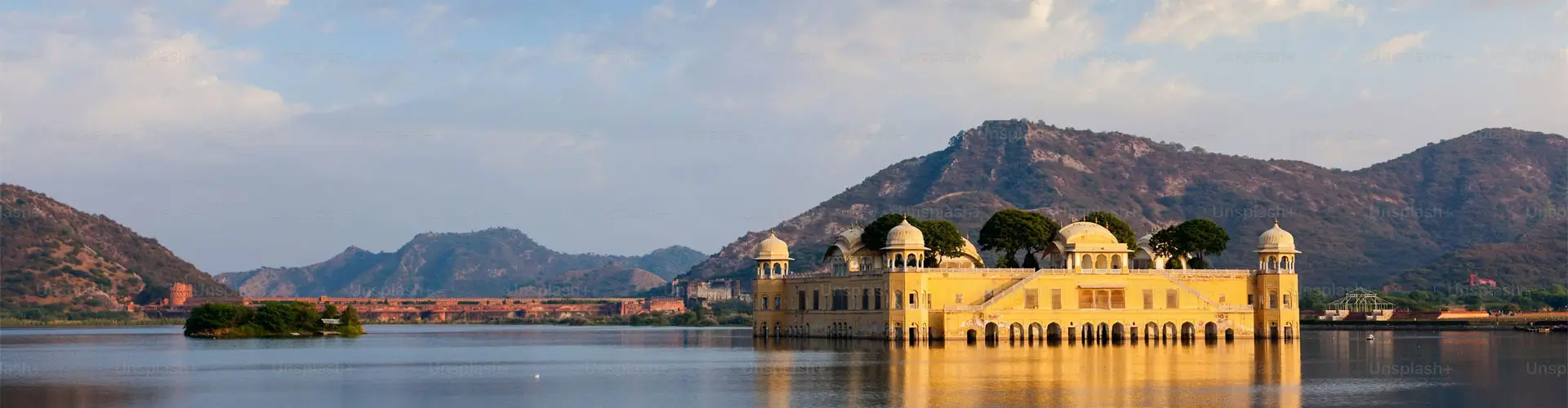
Jaipur stands apart as one of India’s earliest planned cities, designed according to scientific and architectural principles in the 18th century. The morning focuses on the City Palace, a living royal residence that blends Rajput, Mughal, and European influences within its courtyards and museums.
Later, a visit to Jantar Mantar, a UNESCO World Heritage Site, introduces the scientific achievements of Maharaja Sawai Jai Singh II. The monumental astronomical instruments demonstrate advanced understanding of celestial movements and reinforce Jaipur’s reputation as a centre of knowledge rather than only royal display.
Breakfast, Lunch, Dinner
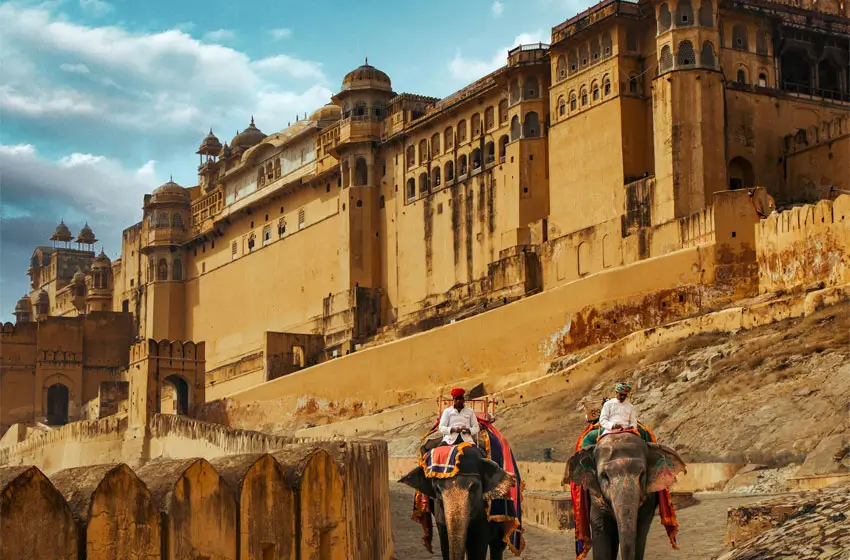
The day begins with an excursion to Amber Fort, located on a hill overlooking Maota Lake. The fort’s layered construction, mirror work, painted halls, and water management systems illustrate how aesthetics and defence were balanced in Rajput architecture. Guided exploration allows time to understand the symbolism behind each section of the fort.
Returning to the city, the afternoon is spent exploring Jaipur’s historic quarters, including traditional bazaars and residential streets. These areas reflect the city’s continued role as a centre for craftsmanship, trade, and urban life shaped by centuries-old regulations and guild systems.
Breakfast, Lunch, Dinner
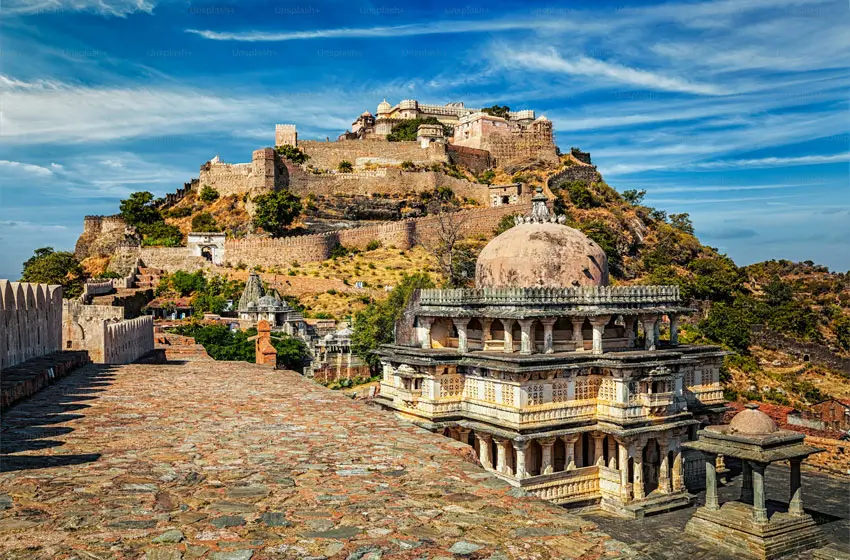
After breakfast, you depart Jaipur for Udaipur, travelling through the rugged Aravalli range. En route, a stop is made at Kumbhalgarh Fort, a UNESCO World Heritage Site famous for its massive defensive walls stretching over the hills. The fort’s strategic position highlights the military planning required to protect Mewar’s independence.
The drive continues toward Udaipur, where the landscape gradually becomes greener and more dramatic. Arrival in the city by evening introduces a calmer, lake-centred atmosphere that contrasts sharply with Jaipur’s structured urban form.
Breakfast, Lunch, Dinner
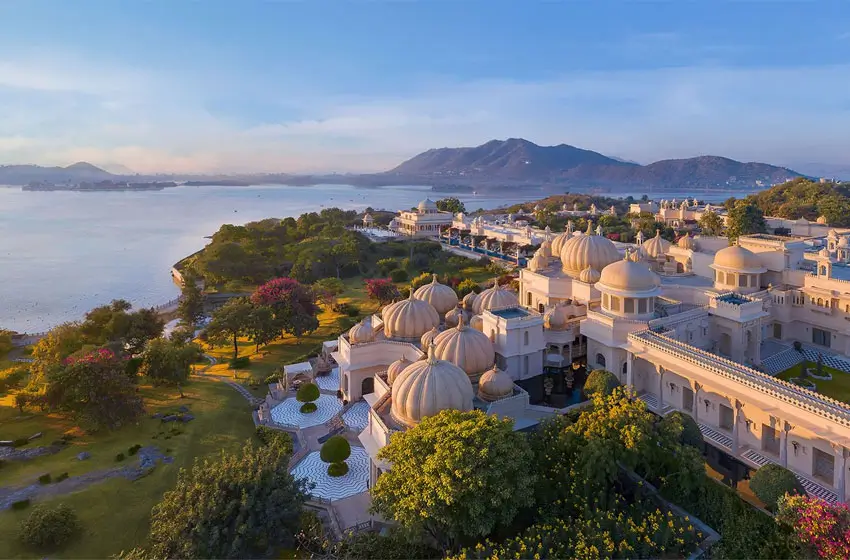
Udaipur’s identity is closely tied to its lakes and royal architecture. The day begins with a detailed visit to the City Palace, a vast complex overlooking Lake Pichola. The palace’s courtyards, balconies, and galleries reflect centuries of Mewar rulers adapting architecture to terrain and climate.
In the afternoon, a private boat ride on Lake Pichola offers views of the city from the water, revealing island palaces and ghats that define Udaipur’s visual character. The experience provides a quieter perspective on royal life and urban planning shaped around water resources.
Breakfast, Lunch, Dinner
This day is reserved for deeper engagement with Udaipur’s heritage beyond its major monuments. A guided walk through the old city reveals temples, stepwells, and residential neighbourhoods that illustrate how daily life functioned alongside royal institutions.
The afternoon remains flexible for personal exploration, rest, or optional visits to local craft centres. This slower pace allows reflection on the journey’s progression from spiritual centres and imperial capitals to a city defined by balance, landscape, and continuity.
Breakfast, Lunch, Dinner
The final day begins with a transfer to the airport for a domestic flight from Udaipur to Delhi, connecting onward to international departures. The journey concludes with a clear narrative arc connecting India’s spiritual, artistic, scientific, and royal traditions.
This comprehensive itinerary leaves travellers with a structured understanding of North and Central India’s heritage, offering not only iconic landmarks but also the cultural logic that connects them across regions and centuries.
Breakfast, Lunch, Dinner
Enquire now and connect with a dedicated Travel Expert who will respond within 24 hours to begin crafting your private journey.
Dev
Travel Expert
12+ yrs experience

Have a look at our original experiences and then contact us with your questions, or call +91-9351360903

Our Experts will send you a detailed holiday itinerary specified to your desires. It's our service promise to you.

Tailor-made doesn't mean expensive! Ask about our price promise and book with financial security.
Delhi - Agra - Jaipur - Kumbhalgarh - Chittorgarh - Udaipur - Delhi
Delhi - Varanasi - Agra - Shekhawati - Jaipur - Jodhpur - Jaisalmer - Delhi
Delhi - Agra - Jaipur- Jodhpur - Udaipur - Delhi
Delhi - Varanasi - Agra - Jaipur - Jodhpur - Udaipur - Delhi
Delhi - Agra - Samode - Jaipur - Mandawa - Bikaner - Rohet - Udaipur - Delhi