
This itinerary is built around contrast. The first part introduces travellers to North India’s imperial legacy through the Golden Triangle, where Mughal symmetry, Rajput fortification and planned cities reflect centralized power and architectural control. The second part moves to Northeast India, where tribal societies evolved independently, guided by oral traditions, community rituals and a deep relationship with land and ancestry.
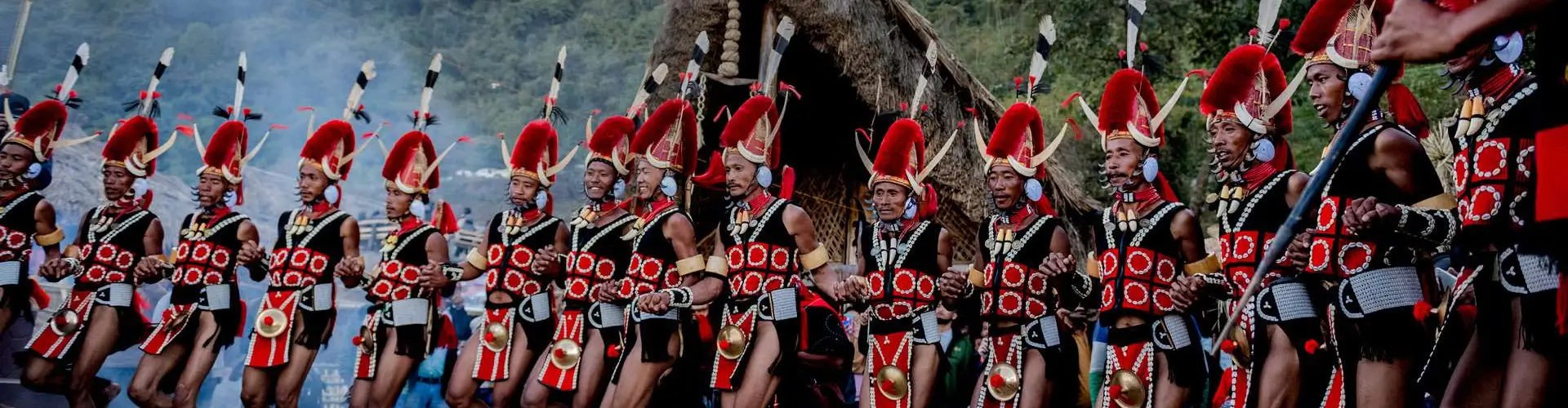
The Hornbill Festival, held annually at Kisama Heritage Village near Kohima, is often called the “Festival of Festivals” because it brings together all major Naga tribes in one place. By structuring the journey from Delhi, Agra and Jaipur to Nagaland, travellers experience a dramatic cultural shift—from courtly monuments and empires to warrior clans, tribal identity and living traditions. This itinerary is ideal for culturally curious travellers seeking a once-in-a-lifetime festival experience rather than conventional sightseeing.
Arrive in Delhi and transfer to your hotel. After check-in, begin a short but focused introduction to the capital’s historical importance. Delhi has served as the seat of power for multiple dynasties, making it an ideal starting point for understanding North India’s imperial past.
The day’s exploration concentrates on architectural landmarks that reflect Mughal planning and governance. Wide ceremonial avenues, historic gardens and monumental structures provide context for the centralized authority that shaped much of North India’s political and cultural development.
Depart Delhi early and travel to Agra, once the heart of the Mughal Empire. On arrival, visit the Taj Mahal, focusing on its architectural precision, symbolism and original riverside setting rather than rushing through the site.
Later, explore Agra Fort, a massive red sandstone complex that functioned as a royal residence and military stronghold. Walking through its courtyards and audience halls illustrates how Mughal rulers governed and defended their empire.
After breakfast, depart Agra and drive toward Jaipur. En route, selected stops introduce the shift from Mughal dominance to Rajput rule, highlighting differences in architectural style and political organization.
Arrive in Jaipur by evening and check in to your hotel. A short orientation drive through the Pink City reveals its uniform façades, broad streets and planned layout, designed to reflect royal authority and civic order.
Begin the day with a visit to Amer Fort, positioned strategically on a hill overlooking the plains. The fort’s layered defenses and palace complexes demonstrate how Rajput rulers balanced military strength with refined court life.
Later, explore Jaipur’s city landmarks that showcase planned urban design and royal aesthetics. The day concludes with preparations for the upcoming transition from North India to the Northeast, both geographically and culturally.
After breakfast, transfer to the airport and fly from Delhi to Dimapur, the primary gateway to Nagaland. The flight itself marks a significant geographical and cultural shift from the plains of North India to the forested hills of the Northeast.
On arrival in Dimapur, begin the scenic drive to Kohima. The road passes through rolling hills, dense forests and small settlements, offering the first glimpse of Nagaland’s terrain and slower pace of life. Check in to your hotel in Kohima and rest.
After breakfast, travel to Kisama Heritage Village, the main venue of the Hornbill Festival. The site is designed to represent traditional villages of all major Naga tribes, creating a living cultural museum during the festival period.
Spend the day attending festival events, including tribal war dances, indigenous sports, music performances and cultural displays. Interactions with performers and artisans offer insight into tribal identity, oral history and community traditions that continue to define Naga society. Return to Kohima by evening.
This full day is dedicated entirely to the Hornbill Festival at Kisama Heritage Village. Each tribal morung (traditional village space) represents a different Naga tribe, allowing visitors to move from one cultural identity to another within a single venue. The day is spent attending tribal performances, storytelling sessions and demonstrations of indigenous skills that form the foundation of Naga society.
Special attention is given to warrior dances, traditional costumes and ceremonial music, which are closely tied to clan history and ancestral pride. The Naga Chilli eating contest, known for featuring one of the world’s hottest chillies, reflects the region’s unique food culture and resilience. The atmosphere is intense, communal and deeply rooted in tradition rather than performance for tourists.
Return to Kisama Heritage Village for deeper engagement with the festival’s non-performance elements. This day focuses on traditional crafts, indigenous games and tribal culinary practices. Visit stalls showcasing handwoven textiles, beadwork, wood carving and metal crafts, each tied to specific tribes and regions of Nagaland.
Food courts highlight tribal cooking methods using smoked meat, fermented ingredients and local herbs. Interactions with artisans and elders provide insight into how cultural knowledge is passed orally through generations. The day concludes with evening concerts that blend traditional music with contemporary Naga expressions, showing how culture evolves without losing its roots.
After breakfast, begin the day with a visit to the Kohima War Cemetery, a solemn site commemorating soldiers who fought in the decisive World War II Battle of Kohima. The cemetery offers a quiet, reflective space that explains Nagaland’s strategic role in global history.
Later, drive to Khonoma, India’s first officially recognized green village. Once known for warrior traditions, Khonoma is now a model of conservation and sustainable living. Walking through the village reveals stone houses, terraced fields and community-managed forests, offering a powerful contrast between historical conflict and modern environmental responsibility.
After breakfast, depart Kohima and drive back to Dimapur through forested hills and winding roads. The journey provides final views of Nagaland’s landscapes and time to reflect on the cultural depth experienced during the festival days.
On arrival in Dimapur, transfer to the airport for your flight to Delhi. The itinerary concludes after tracing a rare journey from imperial North India to one of the most culturally distinct tribal regions of the country.
Enquire now and connect with a dedicated Travel Expert who will respond within 24 hours to begin crafting your private journey.

Dev
Travel Expert
12+ yrs experience

Have a look at our original experiences and then contact us with your questions, or call +91-9351360903

Our Experts will send you a detailed holiday itinerary specified to your desires. It's our service promise to you.

Tailor-made doesn't mean expensive! Ask about our price promise and book with financial security.

Delhi - Jaipur - Ranthambore - Udaipur - Jaisalmer - Jodhpur - Bharatpur - Agra - Delhi

Mumbai - Udaipur - Jodhpur - Bikaner - Jaipur - Ranthambore - Agra - Delhi
Bangalore - Hampi - Chikmagalur - Nagarhole - Coorg - Bangalore