
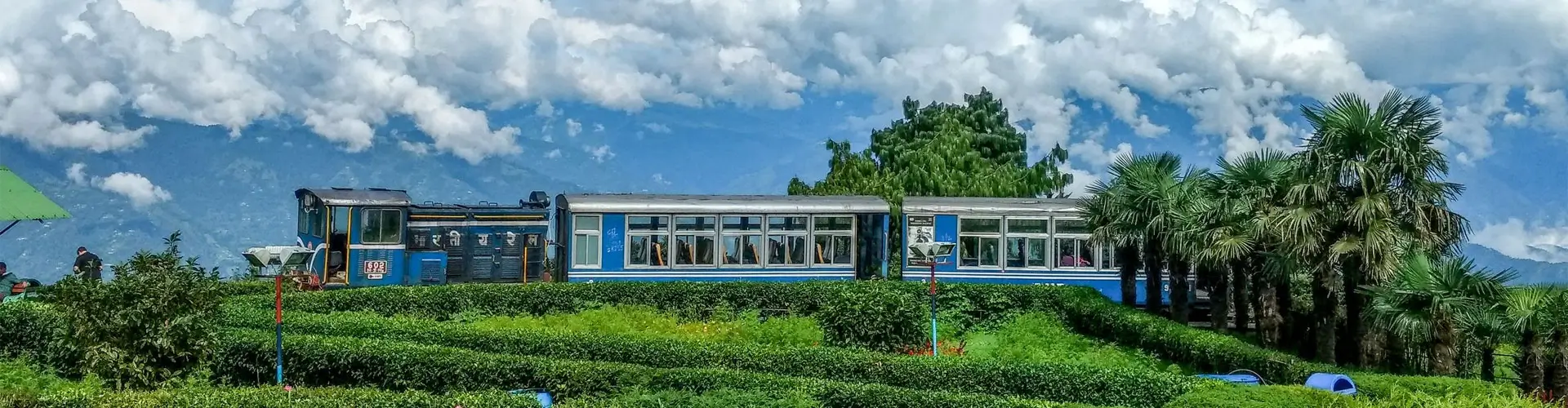
Eastern India’s Himalayan corridor presents a landscape shaped by mist, tea cultivation, and narrow-gauge engineering that defies steep gradients. The Darjeeling Himalayan Railway Luxury Journey follows the historic route from New Jalpaiguri to Darjeeling, tracing one of the world’s most celebrated mountain rail lines.
Recognized under UNESCO’s Mountain Railways of India listing, this route combines heritage locomotives with dramatic altitude transitions.
Unlike royal palace circuits or desert expeditions, this itinerary emphasizes climate, colonial hill architecture, and the tea economy that defined the region’s global identity. The gradual climb through market towns and terraced plantations transforms the rail journey itself into a visual narrative. Each bend in the track reveals a shifting interplay between cloud cover and mountain ridges.
This Luxury Himalayan Train Tour in Darjeeling is structured for travelers who value measured pacing, cultural immersion, and curated accommodation within working tea estates. The focus remains on depth rather than distance, allowing the mountain environment to unfold in a deliberate and memorable progression.
The journey begins at New Jalpaiguri (NJP), where guests board the narrow-gauge Darjeeling Himalayan Railway. The compact steam or diesel locomotives reflect engineering techniques adapted to steep Himalayan terrain. As the train departs, the plains gradually give way to rising foothills and shifting vegetation.
The route passes through bustling roadside markets and small hillside settlements, offering close contact with local life. Loops and zigzag reverses allow the train to gain elevation while maintaining manageable gradients. The iconic Batasia Loop provides a dramatic circular track segment with sweeping mountain views on clear days.
Arrival in Darjeeling occurs by afternoon, with transfer to a selected heritage hotel or plantation bungalow. Evening hours are reserved for acclimatization and quiet observation of the cool mountain air that defines the region’s character.
Before dawn, guests depart for Tiger Hill, positioned at over 8,000 feet above sea level. The early start ensures clear vantage points for sunrise over Mount Kanchenjunga, the world’s third-highest peak. The changing light reveals snow-capped ridges that appear to float above the cloud line.
On return to Darjeeling, the visit continues at Ghoom Monastery, one of the oldest Tibetan Buddhist monasteries in the area. The monastery’s prayer wheels, murals, and serene courtyard introduce spiritual continuity within the Himalayan cultural landscape. Guides explain the influence of Tibetan traditions on Darjeeling’s identity.
Later in the morning, a stop at Batasia Loop provides closer appreciation of the railway’s engineering. Afternoon hours allow for exploration of Darjeeling’s colonial-era promenades, where British-era architecture still defines the town’s skyline.
Darjeeling’s international reputation rests largely on its tea plantations. A private transfer brings guests to a working tea estate where plantation managers outline the lifecycle of tea cultivation, from plucking to withering and rolling. The altitude and microclimate of the region contribute to its distinctive muscatel flavor profile.
A factory walkthrough reveals traditional and modern processing techniques. Guests gain insight into grading systems, export patterns, and the role of Darjeeling tea within global markets. A curated tasting session follows, allowing comparison of seasonal flushes and flavor nuances.
Accommodation within a luxury tea bungalow such as Glenburn Tea Estate reinforces the plantation atmosphere. The surrounding slopes and mist-laden valleys create a secluded retreat distinct from urban hill stations, emphasizing quiet immersion rather than spectacle.
The final day begins with a visit to the Himalayan Mountaineering Institute, established to honor the achievements of Tenzing Norgay and other pioneering climbers. Exhibits include climbing equipment, expedition photographs, and educational displays detailing Himalayan geography.
Adjacent to the institute lies the Padmaja Naidu Himalayan Zoological Park, known for its conservation programs focused on high-altitude species. The setting highlights the ecological sensitivity of Himalayan habitats and the importance of sustainable tourism.
Afternoon departure preparations include transfer arrangements to Bagdogra Airport or NJP railway station. The Darjeeling Himalayan Luxury Train Journey concludes with coordinated assistance, leaving travelers with a layered understanding of mountain rail engineering, tea heritage, and Himalayan culture.
Enquire now and connect with a dedicated Travel Expert who will respond within 24 hours to begin crafting your private journey.

Dev
Travel Expert
12+ yrs experience

Have a look at our original experiences and then contact us with your questions, or call +91-9351360903

Our Experts will send you a detailed holiday itinerary specified to your desires. It's our service promise to you.

Tailor-made doesn't mean expensive! Ask about our price promise and book with financial security.
The full ascent from NJP to Darjeeling typically takes seven to eight hours depending on operational conditions.
Yes, it forms part of the Mountain Railways of India UNESCO World Heritage listing.
October to April generally provides clearer skies for Kanchenjunga views.
Luxury tea estate accommodation can be included as part of the package.
Darjeeling’s elevation is moderate and rarely causes altitude issues.
Yes, guided visits to Tiger Hill, Ghoom Monastery, and tea estates are included.
Heritage seating is compact but adequate; premium options may be arranged.
Yes, regional extensions can be arranged before or after the rail journey.
No, monument entrance fees are excluded.
Advance booking of several months is recommended during peak seasons.